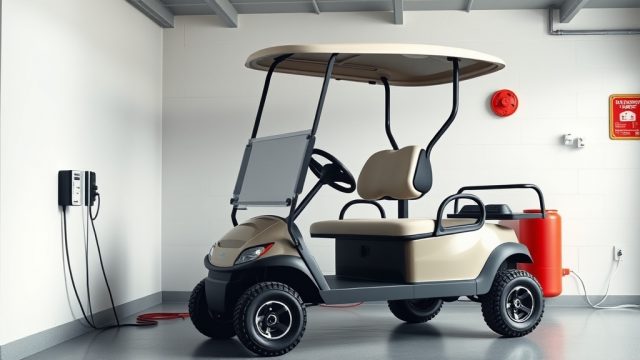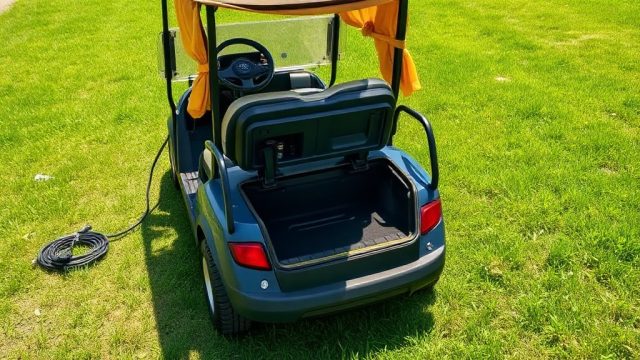

CartCraft Golf Cart Winter Storage: Battery Care and Maintenance Tips
As the fairways freeze and the golf season fades, CartCraft owners face a critical challenge: preserving the heart of their cart—the battery. Improper winter storage can slash battery life by half, leading to costly replacements. This guide delivers targeted, practical advice to keep your CartCraft battery healthy through the cold months, focusing on charging strategies, temperature management, and long-term care.
From lead-acid to lithium conversions, every battery type requires specific attention during off-season storage. By following these expert recommendations, you will ensure your CartCraft is ready to roll when spring arrives, saving hundreds in unplanned expenses.
What Is the Ideal Battery Charge Level for Winter Storage?
The charge level when parking your CartCraft for winter directly determines battery lifespan. For lead-acid batteries (the most common in standard models), the target is a 100% full charge before storage, then maintaining a state of charge between 80% and 100% through periodic charging. Letting a lead-acid battery drop below 100% charge allows sulphation to begin—a process where sulphate crystals form on the plates, permanently reducing capacity. For lithium-ion batteries (common in converted CartCraft units like those from a CartCraft Lithium Battery Conversion), the sweet spot is between 50% and 80% state of charge. Storing lithium batteries at full charge stresses the cells, accelerating degradation.
Use a quality digital multimeter or your CartCraft’s dashboard display to check voltage. For a 48V lead-acid system, 100% charge is typically 50.9–52.0 volts; for 48V lithium, 80% charge reads around 53.0 volts. Mark the voltage on a sticky note inside the battery compartment for quick reference.
How Often Should You Recharge a CartCraft Battery in Storage?
Passive storage without top-up charging is a recipe for dead batteries. The frequency depends on battery chemistry and ambient temperature. For lead-acid batteries, recharge every 30–45 days during winter. For lithium batteries, recharge every 60–90 days. When the battery sits below 12°C (53°F), internal chemical reactions slow—lead-acid self-discharges at about 3–5% per month, while lithium self-discharges at 1–2% monthly. That slow drain still adds up over four to five months.
Here is a simple schedule to follow:
- Lead-acid (conventional flooded or AGM): Charge to 100% every 4 weeks. Use a smart charger to avoid overcharging.
- Lithium (LiFePO4): Charge to 80% every 8 weeks. Do not top off to 100% unless you will drive the cart immediately.
- Monitoring: Check voltage monthly with a digital meter; charge if below 12.5V per 12V unit (lead-acid) or below 52.0V for a 48V lithium pack.
If you cannot recharge each month, invest in a battery maintainer automatic charger that adjusts for temperature effects. These devices float-charge the battery only as needed, preventing overcharge and undercharge.
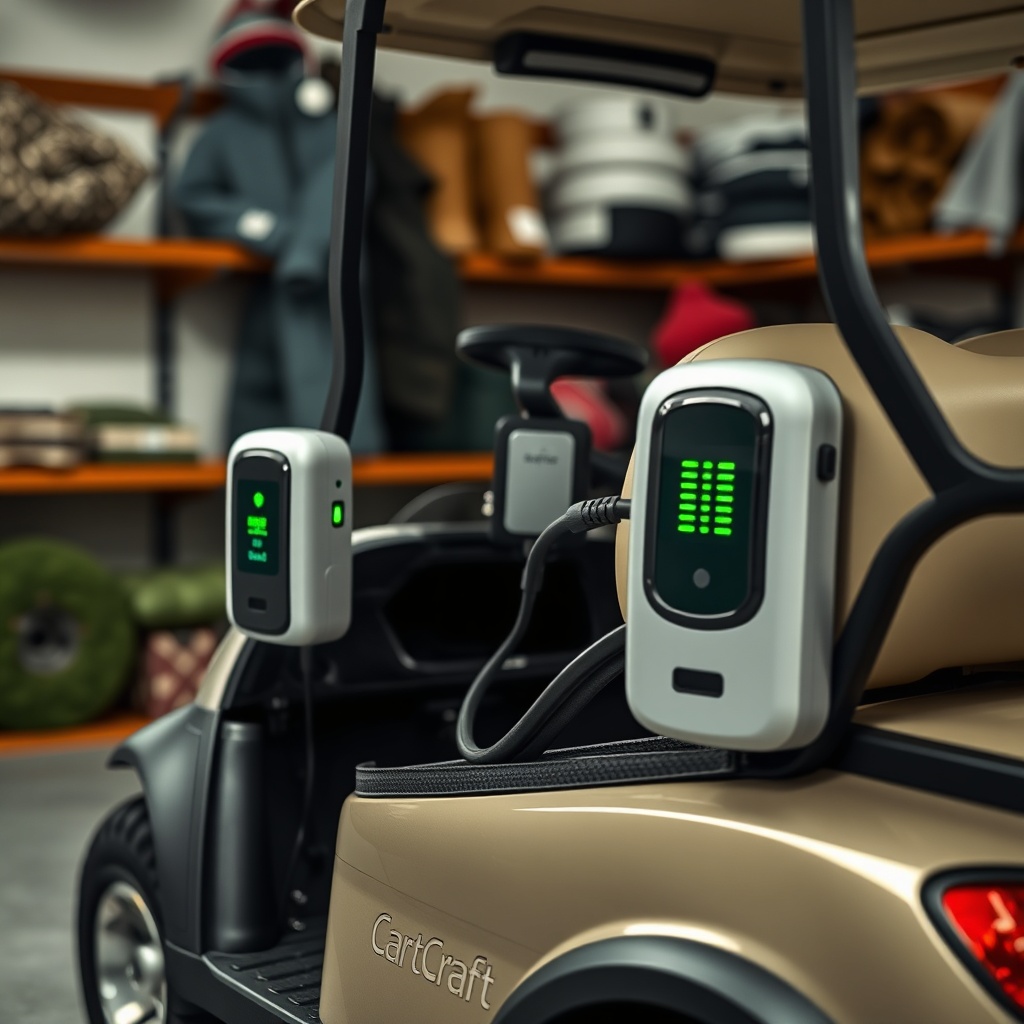
Should You Remove the Battery from the CartCraft for Winter?
Pulling the battery is unnecessary for most CartCraft owners, but it makes sense in extreme conditions. If your storage area experiences temperatures below -10°C (14°F) for extended periods, removing the battery and storing it in a warmer place (above freezing) protects it from freezing damage. Lead-acid batteries freeze faster when discharged—a fully charged lead-acid battery can handle -40°C; a discharged one can freeze at -7°C, cracking the case. Lithium cells have electrolyte that remains liquid down to -20°C, but cold saps capacity.
If you remove the battery, place it on a wooden shelf (not concrete) to avoid cold bridging. Clean the terminal posts with a wire brush and apply dielectric grease to prevent corrosion. Store in a dry, ventilated area away from open flames or sparks. For most UK garages or sheds (which stay between 5–15°C with minimal heating), leaving the battery in the cart with regular charging works fine. For detailed brake system preparation during removal, refer to the CartCraft Golf Cart Brake Fluid Flush guide—while the battery is out, flushing the brake fluid is easier.
How Does Winter Temperature Affect Charging Efficiency?
Temperature swings dramatically impact how a battery accepts a charge. At 0°C (32°F), a lead-acid battery can only accept about 70% of its nominal capacity—the rest is wasted as heat. At -10°C (14°F), that drops to 50%. The charger senses lower voltage and may stop early, leaving the battery undercharged. For lithium batteries, charging below 0°C can trigger battery management system (BMS) cutoffs and potential lithium plating, which permanently reduces capacity.
To counter this, always charge your CartCraft in a space above 10°C (50°F) if possible. If you must charge in a cold garage, use a temperature-sensing charger that adjusts voltage and current. Never charge a frozen battery—warm it to at least 5°C (41°F) first. Proprietary CartCraft chargers often include thermal sensors; third-party models may not, so verify. For a deeper dive, see How Temperature Affects Battery Charging on CartCraft Golf Carts.
Pro tip: Charge the battery immediately after a short drive while it is still warm from use—this reduces cold-charging inefficiency. Avoid charging when the battery is below 5°C; wait for a milder day or warm the storage area.
What Maintenance Should You Perform During Winter Storage?
Beyond charging, winter is prime time for preventative battery care. Follow this table for a quick severity and action guide:
| Issue | Severity | Action Required | Cost Estimate (GBP) |
|---|---|---|---|
| Corroded terminals (white/blue crust) | Moderate—can cause poor connection | Clean with baking soda solution, rinse, dry, apply sealant | £5–10 |
| Low electrolyte (flooded lead-acid only) | High—exposes plates to air | Top up with distilled water to cover plates | £3–8 (distilled water) |
| Battery case cracks (from freezing) | Critical—acid leak risk | Replace battery immediately | £150–400 (replacement) |
| Sulfation (white coating on plates) | Moderate to high—reduces capacity | Desulfation charger cycle or replace if severe | £30–80 (charger) or £200–400 (battery) |
| Parasitic drain (lights or accessories left on) | Moderate—can fully discharge in days | Disconnect negative terminal or install kill switch | £5–15 (kill switch) |
Additionally, check the battery hold-down hardware to prevent vibration damage. Inspect cables for fraying or rodent damage—mice love gnawing on rubber insulation in winter storage. Use peppermint oil-soaked cotton balls near the battery compartment as a safe rodent deterrent.
What Are the Best Practices for Lithium Battery Winter Storage?
Increasingly, CartCraft owners upgrade to lithium batteries for lighter weight and longer cycle life. If your cart has undergone a CartCraft Lithium Battery Conversion, storage requirements differ significantly. Lithium’s biggest winter advantage is minimal self-discharge—barely 1–2% per month even in cold. However, its greatest vulnerability is charging while cold. Never charge a lithium battery if its internal temperature is below 0°C (32°F). The BMS will protect the cells, but repeated cold charging cycles can damage it.
Store lithium batteries at 50–80% state of charge—this cut reduces internal resistance and extends calendar life by 30% compared to storing at 100%. Use a charger that communicates with the BMS to stop at the correct voltage (for 48V systems, around 53.0V for 80%). If you anticipate temperatures below -20°C, remove the lithium battery and store indoors in a climate-controlled room (10–25°C). Do not leave it in an uninsulated shed. For performance metrics before and after conversion, check how tire size influences range and speed—lithium’s consistent voltage output interacts differently with larger tyres.
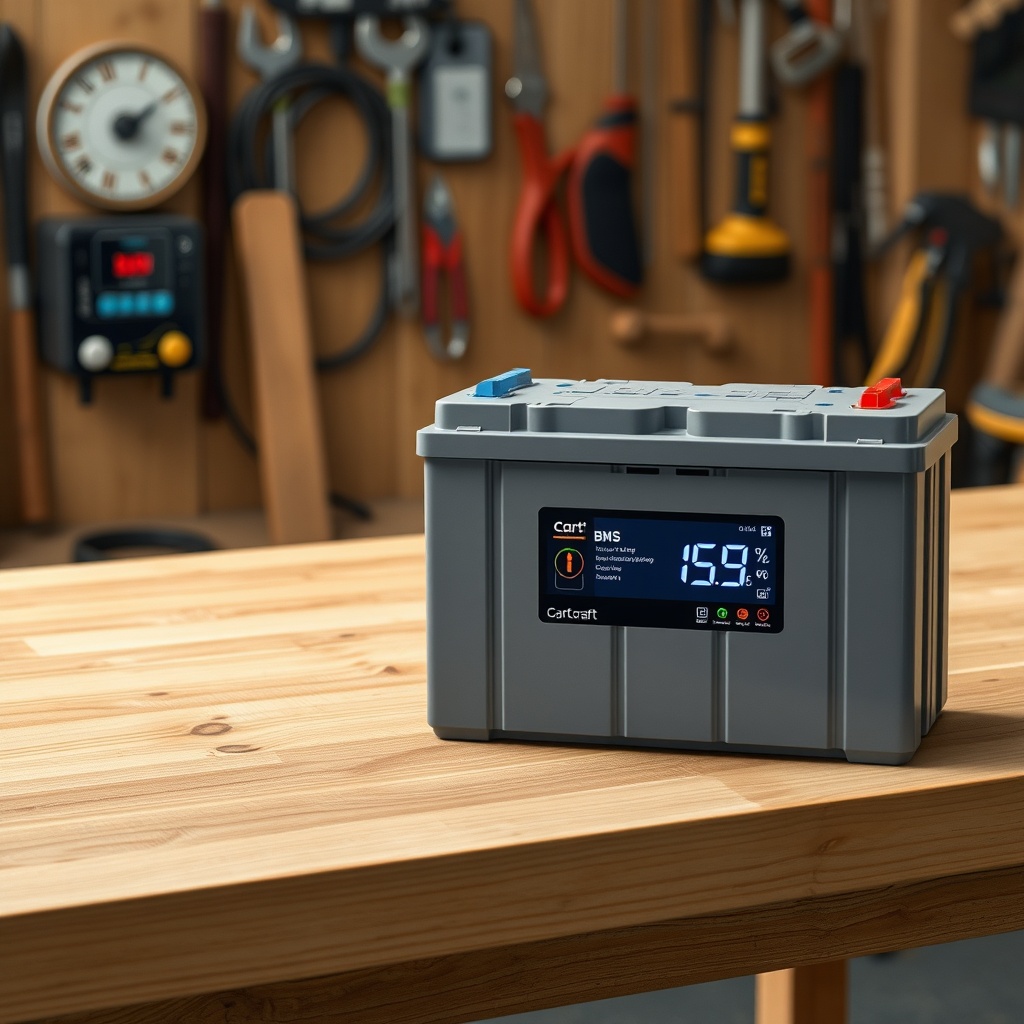
What Owners Say
CartCraft owners across the UK have shared their winter storage triumphs and failures. Here are three real-world experiences:
- Mark, Surrey: “I ignored the charging schedule for my lead-acid CartCraft two winters ago. Came back to a dead battery with 8 volts. Had to replace the whole pack for £380. Now I use a automatic float charger and charge every 4 weeks. Battery lasted three more winters.”
- Priya, Edinburgh: “Converting to lithium was a game changer for cold storage. No more worrying about lifting heavy batteries or acid leaks. I charge it to 60% in November and top up once in February. It cranks perfectly every spring.”
- Dave, Newcastle: “I stored my 48V CartCraft in an unheated garage and tried charging at -2°C. The charger ran for six hours but only reached 80%. Now I bring the battery inside overnight before charging. Simple trick, saved me big headaches.”
Track your own battery voltage and charging dates in a simple log. Many owners stick a calendar on the garage wall with “Battery Day” circled every 30 days. Consistency is the secret.
Frequently Asked Questions
1. Can I leave my CartCraft battery connected to the charger all winter?
Yes, but only with a smart charger designed for prolonged float charging. A standard charger left connected can overcharge and cook the battery. Use a charger that automatically switches to a maintenance mode after reaching full charge. For lead-acid, that voltage is around 51–52V; for lithium, ask your BMS manual. Leave the charger on in a ventilated area, and check every few weeks that the battery remains warm (not hot) to touch.
2. How do I know if my battery has frozen?
Signs include a bulging case, cracks, or a completely dead battery that shows 0 volts. Frozen lead-acid batteries often have ice crystals visible through the vent caps. Do not attempt to charge a frozen battery—warm it gradually to room temperature (20°C) for 24 hours, then test voltage. If below 12.4V for a 12V unit, it may have internal damage requiring replacement.
3. Should I disconnect the battery cables for winter?
Disconnecting the negative terminal is a good practice to stop parasitic drains from clock radios, controllers, or memory systems. On CartCraft models with digital displays, disconnecting may reset settings, but this is non-damaging. For lithium batteries, some BMS units require constant power—check your manual before disconnecting. Otherwise, disconnect negative first, then positive. Reconnect in reverse order.
4. Does tire side size affect battery drainage in winter?
Indirectly, yes. Larger tyres increase rolling resistance and require more power to move, which increases discharge during any pre-storage driving. For CartCraft with oversized wheels, the battery may drain faster during last-minute rounds. See how tire size affects speed and range for details. For storage itself, tyre size does not impact battery charge because the cart is stationary.
5. Can I use a car battery charger on my CartCraft battery?
Only if the charger matches the voltage (48V for most CartCraft models) and the charging profile (lead-acid or lithium). A car charger typically outputs 12V or 24V, which will not fully charge a 48V system. Using a 12V car charger on a 48V battery undercharges it or may not work at all. Use a dedicated CartCraft-compatible charger or a universal 48V smart charger.
6. What if I need to use my CartCraft mid-winter?
If you drive the cart (even a short distance) during winter storage, fully recharge it immediately afterwards. Cold batteries lose capacity as you drive; a short trip can drain 30% capacity without you noticing. After the drive, plug in the charger and let it complete the cycle. Re-enter your 30-day charging schedule from that day forward.