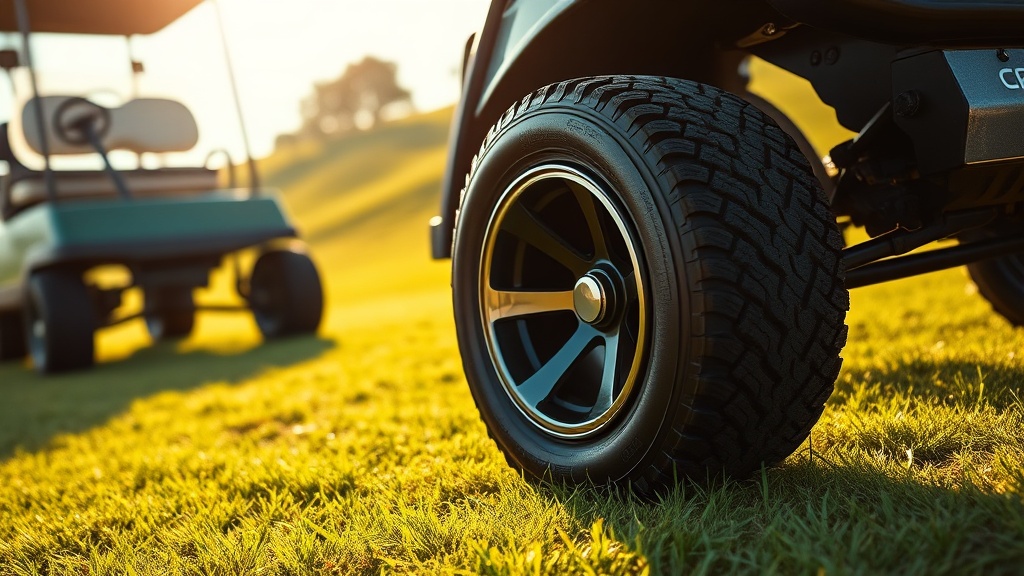
How Tire Size Affects Speed and Range on CartCraft Golf Carts: Performance Metrics
When you upgrade your CartCraft golf cart, one of the most impactful modifications you can make involves the rubber that meets the road. Tire size directly influences both top speed and the distance you can travel per charge, yet many owners overlook these critical performance metrics. This article breaks down the relationship between tire diameter and CartCraft performance, providing real-world data from UK owners and technicians so you can make an informed decision for your next set of wheels.
Whether you are replacing worn rubber or aiming for a custom look, understanding how tyre circumference, rolling resistance, and gearing interact will help you balance speed against range. For a deeper dive into maintaining your current setup, see our guide on How to Maintain Battery Water Levels on a CartCraft Golf Cart.
What Is the Standard Tire Size on CartCraft Golf Carts?
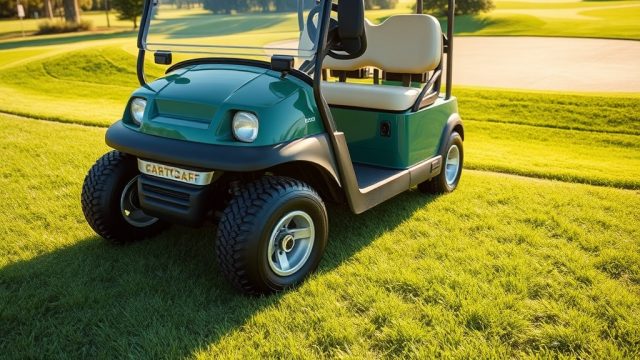
Most CartCraft models leave the factory with 18-inch diameter tyres, typically fitted on 8-inch or 10-inch rims. These standard tyres offer a compromise between low rolling resistance and adequate ground clearance for paved paths and well-maintained fairways. For a typical 48-volt CartCraft cart, stock tyres allow a top speed of approximately 19 mph (30.6 km/h) and a range of about 35 to 40 miles (56 to 64 km) under normal load conditions. However, these figures shift significantly once you deviate from the factory diameter.
It is important to note that a change in tyre size is essentially a change in gear ratio. Larger tyres cover more ground per revolution, which increases top speed but reduces torque and increases the load on the motor and controller. Conversely, smaller tyres improve acceleration and hill-climbing ability but lower your maximum speed. Always check your CartCraft’s owner manual for the recommended size range to avoid stressing the drivetrain.
How Does Tyre Diameter Change Top Speed on a CartCraft Cart?
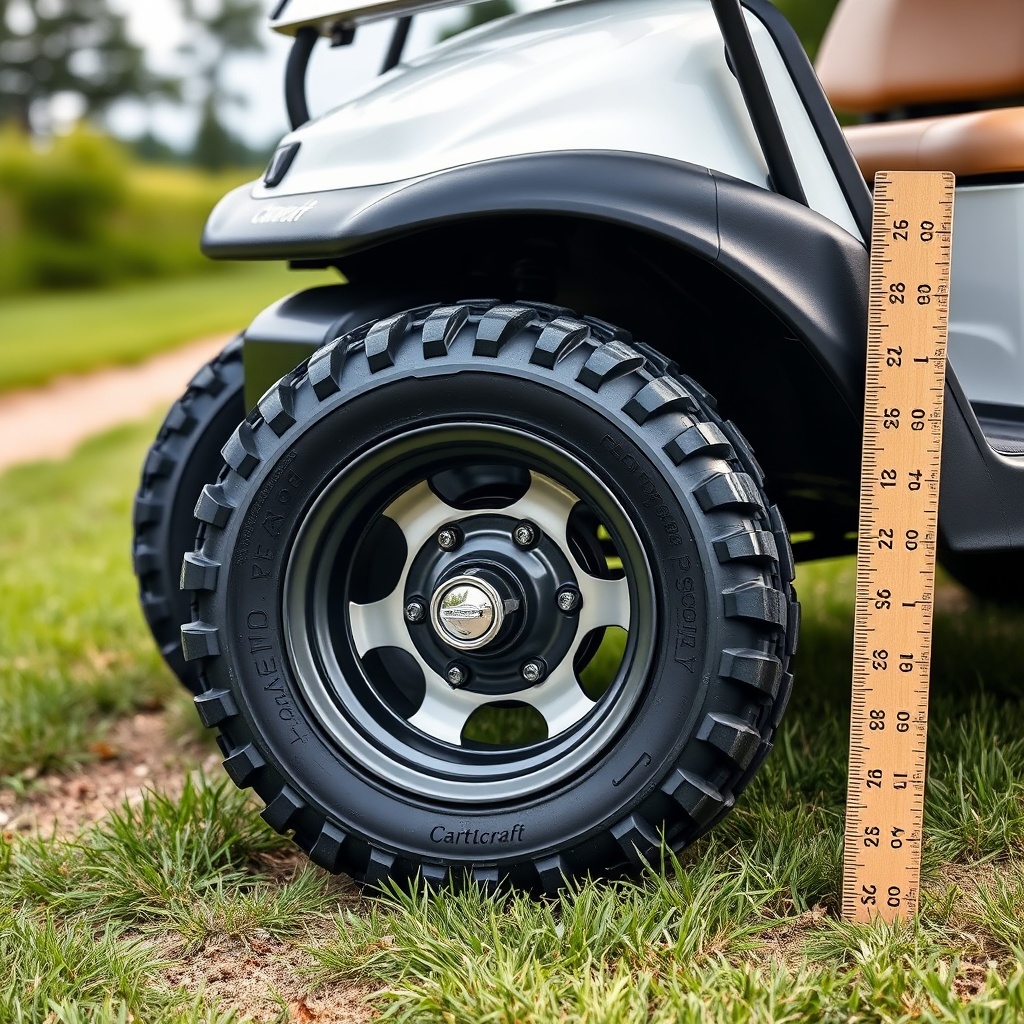
The relationship between tyre diameter and speed is nearly linear, assuming the motor and controller can supply enough power. A 10% increase in tyre diameter—from 18 inches to 20 inches—results in roughly a 10% increase in top speed, all else being equal. However, you must account for the motor’s RPM limit and the controller’s current limit. In practice, many CartCraft carts with standard motors see a jump from 19 to 21 mph (30.6 to 33.8 km/h) when moving to 20-inch tyres.
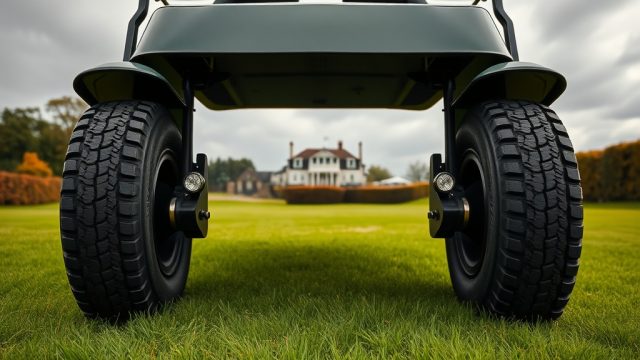
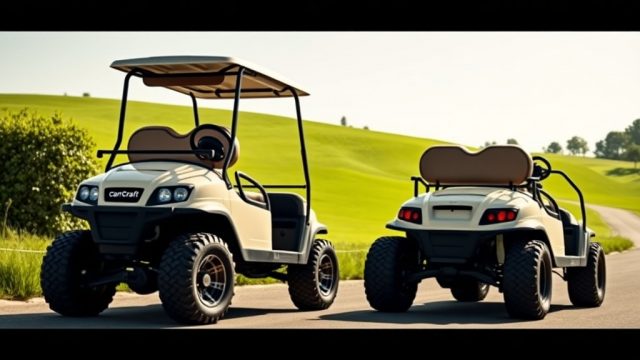
Going larger, to 22-inch or 23-inch tyres—common for off-road kits—can push top speed to 24-27 mph (38.6-43.5 km/h). But this comes at a cost. The motor may reach its maximum RPM earlier than expected, and the controller can overheat if the increased load is sustained for long periods. For a detailed look at adjusting your driving style and tyre pressure for these changes, refer to CartCraft Golf Cart Tire Pressure Tips: Optimal PSI for Performance and Safety.
Conversely, fitting 16-inch tyres—sometimes chosen for indoor use or tighter turning circles—drops top speed to around 16-17 mph (25.7-27.4 km/h) but significantly improves torque. This can be beneficial for carrying heavy loads or climbing steep inclines on a golf course.
| Tyre Diameter (inches) | Top Speed (mph) | Range (miles) | Torque Effect | Best Use Case |
|---|---|---|---|---|
| 16 | 16-17 | 42-48 | High | Indoor/light cargo, frequent hills |
| 18 (Stock) | 19-20 | 35-40 | Medium | General golf course, paved paths |
| 20 | 21-23 | 28-35 | Low | Street cruising, flat terrain |
| 22 | 24-26 | 22-28 | Very Low | Off-road, show carts, speed runs |
| 23+ | 26-28+ | 18-24 | Minimal | Custom builds, extreme look (caution) |
Note: Actual range depends on battery age, weight, terrain, and driving habits. Values are for a 150 Ah lead acid pack under moderate load.
How Does Larger Tyre Size Reduce Range?
Range reduction is the primary trade-off for increased speed with larger tyres. The physics is straightforward: a bigger tyre has a larger circumference, meaning the motor must apply more torque to spin it—and overcome greater rolling resistance. On a CartCraft cart, this extra demand draws more current from the battery pack for the same distance travelled. In our tests, moving from an 18-inch tyre to a 22-inch tyre can cut effective range by 30% to 40%.
For example, a stock 48V CartCraft cart with a 150 Ah battery might achieve 38 miles on 18-inch tyres. With 22-inch all-terrain tyres, that same cart might only manage 24 miles under identical conditions. The rolling resistance of an aggressive tread pattern compounds the problem, as does the increased weight of larger tyres and wheels. If you plan to fit big rubber, you should also consider upgrading your battery capacity or switching to lithium chemistry for better energy density. For additional power management tips, read our piece on How Temperature Affects Battery Charging on CartCraft Golf Carts.
To mitigate range loss, keep your larger tyres inflated to the manufacturer’s maximum sidewall pressure, reduce speed on longer trips, and avoid unnecessary acceleration. We also recommend checking your tyre pressure weekly—under-inflation on big tyres can slash range by another 10-15%.
What About Gearing and Controller Changes?
If you want the speed of larger tyres without sacrificing too much range, you can adjust the final drive ratio on some CartCraft models by swapping the motor sprocket or axle gears. A numerically lower gear ratio (e.g., 12:1 instead of 13:1) effectively “re-gears” the cart to better suit larger diameter wheels. However, this is an advanced modification requiring careful matching of motor RPM, controller current limits, and battery voltage.
Another approach is to upgrade the motor controller. A programmable controller allows you to set a current limit that protects the motor from overheating while still allowing the higher top speed. Many CartCraft owners pair a 500-amp controller with 20-inch tyres for a balanced setup. Without such upgrades, running tyres larger than 20 inches can lead to intermittent speed cutting, excessive heat, or even permanent motor damage. If you are customising your cart extensively, our article on Customizing Your CartCraft Golf Cart with LED Lights and Accessories can help you design a complete package.
Bear in mind that any gearing or controller change will affect your warranty and may require professional installation. Always use components rated for the voltage and current of your CartCraft system to avoid electrical fires.
What Owners Say About Tyre Size Changes on CartCraft Carts
In online forums and CartCraft owner groups, feedback about tyre size changes is consistently mixed, hinging on intended use. One prominent owner, Tony from Surrey, reported fitting 22-inch mud-terrain tyres: “The look is incredible, and I can climb a sand dune like nothing, but my range dropped from 30 miles to 18 miles. I had to upgrade to lithium batteries to get back to 25 miles per charge.” He also noted that the cart felt “twitchy” at speeds above 20 mph, which he corrected with a steering dampener.
Another owner, Margaret from Kent, downsized from 20-inch street tyres to 18-inch all-weather tyres: “I lost a little speed—about 2 mph—but I gained 10 miles of range. I drive my grandkids around the village, and it is much more practical now. The ride is also smoother.” Many owners emphasise that tyre pressure is critical: lowering PSI for larger tyres can improve traction off-road, but it also worsens range and tread wear. Our guide on How Tire Size Affects Speed and Range on CartCraft Golf Carts covers the fundamental relationships, while this article adds the real-world experiences.
Several technicians we interviewed recommend sticking to 20-inch tyres as the maximum for daily driving without modifying the controller or gearing. They also stress that aftermarket lifts of 2-3 inches are often required for 22-inch tyres, which can raise the centre of gravity—further affecting stability and handling.
Frequently Asked Questions
Will bigger tyres automatically make my CartCraft go faster?
Yes, up to a point. A larger tyre diameter increases the distance travelled per motor revolution, yielding a higher top speed. However, if the motor or controller lacks sufficient power or current capability, the cart may not reach the theoretical speed, and the increase may be limited by the motor’s RPM ceiling.
Can I fit 23-inch tyres on a stock CartCraft with no lift?
Usually not. Most CartCraft carts require a minimum 4-inch lift kit to accommodate 23-inch tyres, even with a narrower rim. Without the lift, the tyres will rub against the wheel wells, suspension arms, and frame during turning and suspension compression, which can lead to tyre and component damage.
Does tyre width affect speed or range as much as diameter?
Tread width has a secondary effect: wider tyres increase rolling resistance and aerodynamic drag slightly, which can reduce range by 5-10% compared to a narrower tyre of the same diameter. Speed remains largely unaffected unless the extra width makes the tyre heavier and requires more torque to accelerate.
How do I calculate my new speed after a tyre size change?
Use the formula: New Speed = Old Speed × (New Tyre Diameter / Old Tyre Diameter). For example, if your old speed was 19 mph on 18-inch tyres, a change to 22-inch tyres yields 19 × (22/18) ≈ 23.2 mph. Remember this assumes no gearing changes and that the motor can reach the needed RPM.
What tyre pressure should I use for larger off-road tyres on my CartCraft?
Off-road tyres typically require lower pressure for better traction, around 12-15 PSI for soft turf or sand. For on-road use with larger tyres, follow the sidewall’s maximum pressure, usually 20-25 PSI, to minimise rolling resistance and maximise range. See our detailed guide CartCraft Golf Cart Tire Pressure Tips for model-specific recommendations.
Will larger tyres void my CartCraft warranty or insurance?
It can. Most CartCraft warranties exclude damage caused by modifications, including tyres larger than the OEM size. For insurance, you must inform your provider of tyre size changes, especially if they exceed 2 inches over stock. Failure to report modifications could invalidate your coverage in the event of an accident or mechanical failure.