
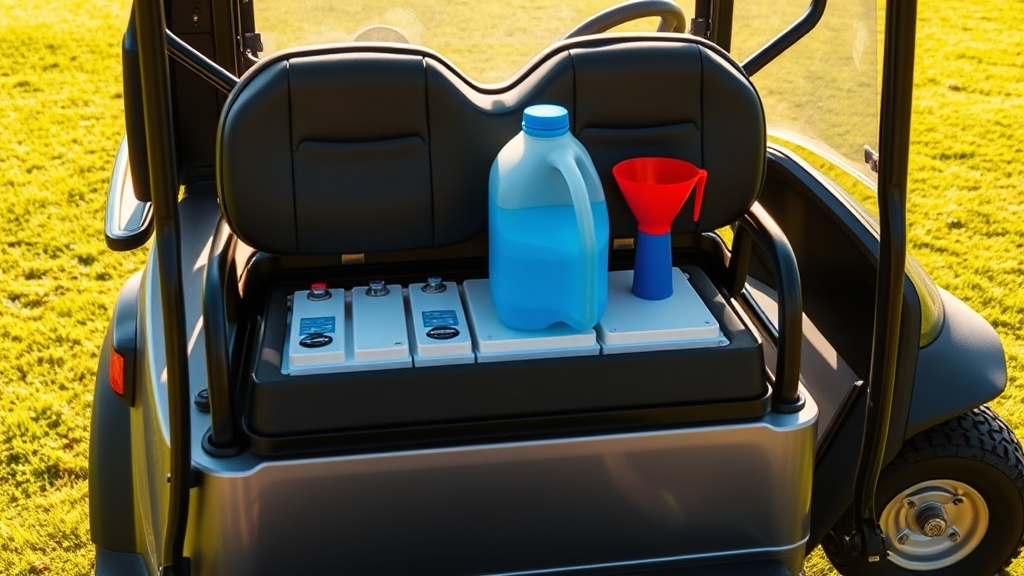
How to Check and Refill Battery Water on EZGO RXV Elite
Keeping your EZGO RXV Elite’s batteries properly hydrated is arguably the single most important maintenance task you can perform. Neglecting water levels leads to sulfation, reduced range, and premature battery failure—typically costing you £400–£700 for a replacement set. This guide walks you through the precise procedure for your RXV Elite, including distilled water requirements, safety precautions, and frequency recommendations that differ from standard golf carts due to the Elite’s unique regenerative braking profile.
We’ll cover how to access the battery compartment on the RXV Elite (which has a slightly different latch system than earlier RXV models), interpret water level indicators without overfilling, and avoid common mistakes that shorten battery life. Whether you’re a weekend golfer or use your Elite for farm chores, proper watering keeps your £4,000+ investment running reliably for years.
Why Does the EZGO RXV Elite Require More Frequent Water Checks Than Standard Carts?
The RXV Elite uses a more aggressive regenerative braking system than standard electric carts, which recaptures kinetic energy during deceleration and sends it back to the batteries as a charging current. While this extends your range by up to 15% on a full charge, it also creates more frequent charge cycles—especially if you drive in hilly terrain or frequently stop-and-start. Each charge cycle drives hydrogen and oxygen gas production, which consumes water in the electrolyte solution.
Unlike a standard RXV, the Elite’s controller maintains a slightly higher absorption voltage (typically 62.5–62.9V on a 48V system) during the final stage of charging. This hotter charge profile helps desulfate plates but also boils off water more quickly. Most owners report needing to top off water every 3–4 weeks during heavy summer use, compared to every 6–8 weeks on a standard RXV. Neglecting this schedule can lead to exposed plates, which sulphate irreversibly within days.
Another factor: the Elite’s sealed battery compartment traps heat more effectively, reducing evaporation in cool weather but accelerating it when the cart is stored in direct sunlight or a warm garage. If your Elite sits in a shed that hits 30°C or hotter, plan on checking water levels every two weeks.
Pro tip: If you notice your charger running for longer than usual (over 8 hours) or cutting off early, low water is often the culprit because electrolyte concentration spikes and triggers the charger’s safety shutoff prematurely.
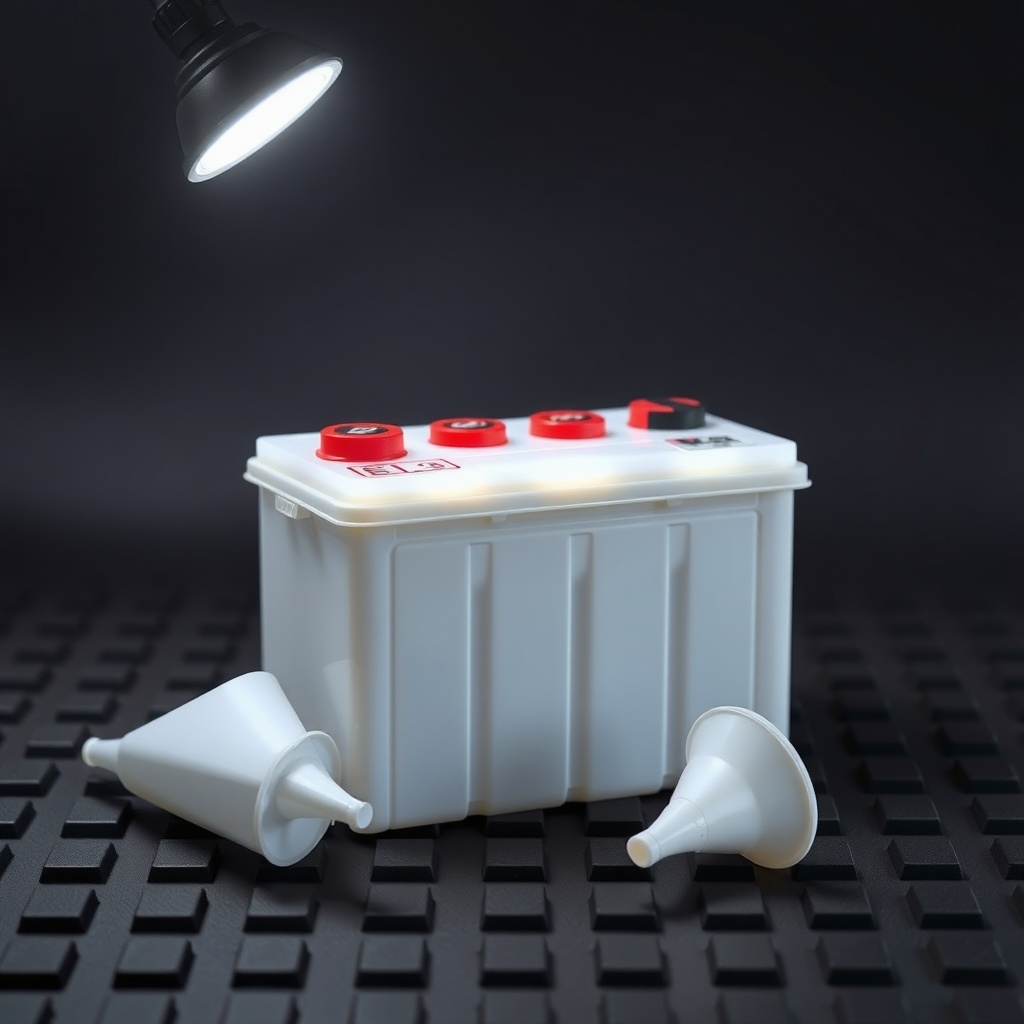
What Supplies and Safety Gear Do You Need for the Job?
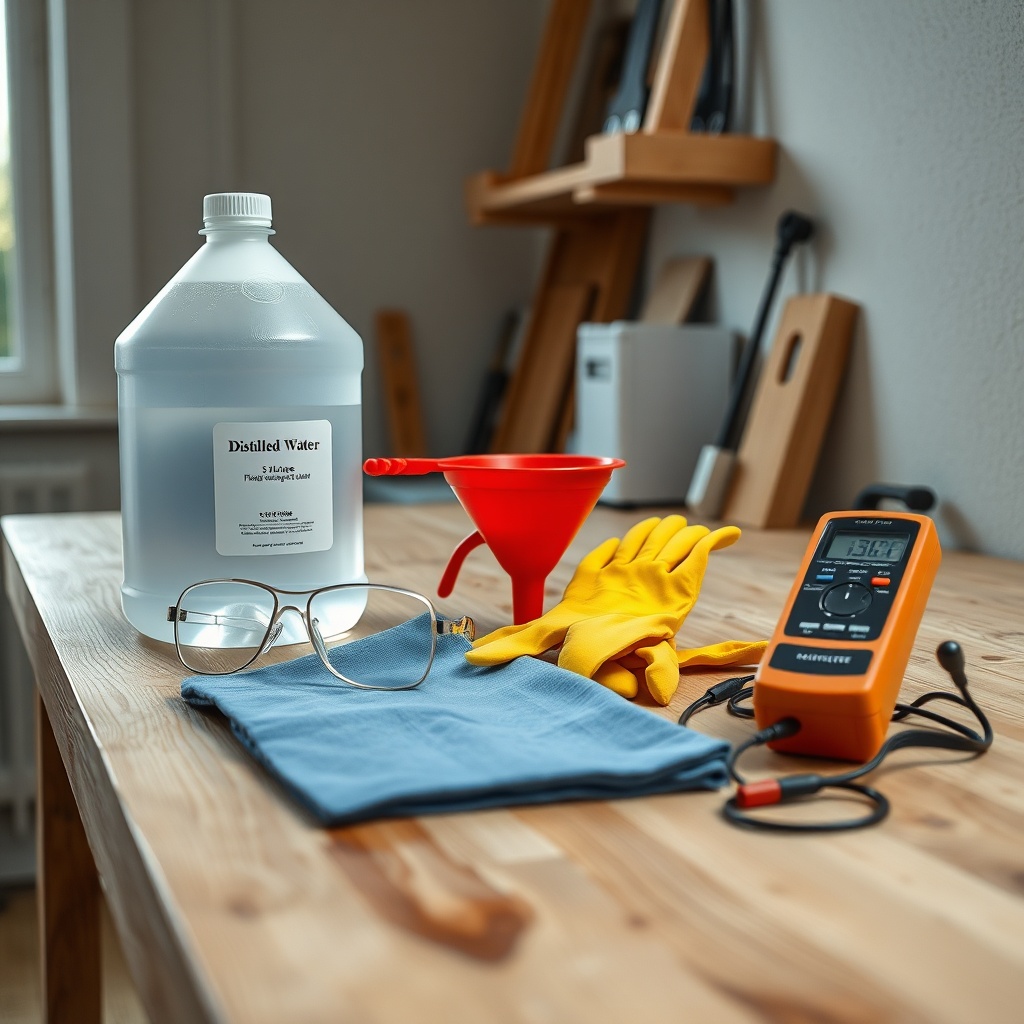
Before opening the battery compartment, gather these specific items—using the wrong water or tools can damage your batteries or void your warranty.
- Distilled water only (deionised or tap water introduces minerals that short-circuit plates). Buy a 5-litre jug from Halfords for £1.50–£2.00.
- Rubber gloves and safety glasses – battery acid is corrosive. Even a splash in your eye can cause permanent damage.
- Clean funnel – ideally one with a narrow spout to avoid dripping onto battery tops (which causes self-discharge across terminals).
- Torque wrench or socket set – to remove the battery compartment cover bolts (two 10mm bolts on the Elite’s battery tray).
- Distilled water bottle with built-in spout or a turkey baster (dedicated for battery use only).
- Clean rag or paper towels – for drying any spills instantly.
- Voltmeter (optional but recommended) – to confirm the batteries aren’t being charged while you work.
Never add water to a battery that is fully discharged (below 20% SOC) because the electrolyte level rises when charged—filling now risks overflow and acid spillage. Always charge first, then water after charging completes and the battery has cooled for at least 30 minutes.
If you’re unsure about your battery bank’s health, read our guide on EZGO RXV Elite No Start: Troubleshooting the Most Common Causes to rule out other issues before assuming low water is the problem.
How Do You Access the Battery Compartment on the EZGO RXV Elite?
The RXV Elite’s battery compartment is located under the seat, but the lid design differs from earlier RXVs. On the Elite, you’ll find a single T-handle latch at the front edge of the seat base, plus two Phillips-head screws on the back edge near the rear bumper. Here’s the exact process:
- Park the cart on a level surface, turn the key to OFF, and remove it.
- Lift the rear seat bottom—pull up on the front edge where the T-handle is; it should pop up with moderate force. If it sticks, don’t yank; check that the two rear screws are fully removed.
- Locate the two 10mm bolts securing the battery hold-down bracket. These are usually black and sit across the centre of the battery tray. Remove them with a socket wrench and set them aside in a safe place (they can drop into the battery box if you’re careless).
- Lift the hold-down bar straight up—don’t tilt it sideways or you risk shorting terminals if the bar is metal (it is on most Elite models).
- You now have full access to the six 8-volt batteries (standard configuration) or four 12-volt batteries (some 2021+ models). The water caps are typically grey, red, or green, depending on the brand (Trojan, US Battery, or Interstate).
Safety note: Before removing any caps, verify that the charger is unplugged and the cart is not in a charge cycle. The Elite’s onboard charger can keep the batteries at a float voltage for extended periods—unplugging the AC cord is essential.
How to Check Each Cell Without Overfilling
Here’s where many owners make mistakes. The goal is to keep the electrolyte level ¼ inch (6mm) above the top of the plates, and never to fill to the bottom of the fill tube (the plastic ring inside the cell opening). Overfilling causes acid to leak out during charging, which corrodes terminals and creates a conductive path that drains your battery overnight.
Follow this step-by-step:
- Remove all caps from one battery at a time (six caps per 8V battery—one per cell). Lay them on a clean rag arranged in the order you removed them—this prevents mixing up caps from different batteries (they can warp slightly over time).
- Shine a flashlight into each cell. The plates should be fully submerged. If you see any exposed plate edges, the water is critically low and you need to add immediately.
- Use your distilled water bottle with a narrow spout to add water slowly—stop when the water reaches the bottom of the fill ring (the plastic indicator). Do not fill above the ring.
- If you’re unsure, add a little less and recheck after charging—the water level rises as the battery accepts charge and electrolyte expands.
- Wipe the top of the battery clean with a dry rag before replacing the caps—any water on the top will create a parasitic drain.
- Repeat for all six (or four) batteries. Expect to use about 100–200ml per battery if they were moderately low.
Important: If the water level is above the plates but below the fill ring, you don’t need to add yet. Overwatering is more common than underwatering and causes acid stratification, which reduces capacity. When in doubt, leave it alone.
What Is the Recommended Watering Schedule for the Elite?
Unlike some general advice that says “check monthly,” the Elite’s usage pattern demands a more tailored approach. Use this simple severity table to decide how urgently you need to water:
| Condition | Severity Level | Action Needed |
|---|---|---|
| Water visible ¼ inch above plates, no exposed metal | Usually not urgent | Check again in 2 weeks; add only if level drops below fill ring |
| Water at plate level or slightly above—plates still wet | Needs attention soon | Add distilled water before next charge cycle; use charger immediately after to mix |
| Plates exposed (dry, white/grey appearance) | Critical—do not charge | Add distilled water immediately, wait 2 hours, then charge; if plates remain exposed after filling, battery is likely damaged |
| Water level above fill ring (overflow marks on battery top) | Needs attention soon | Siphon out excess using a turkey baster; clean battery top; check for acid creep in terminal area |
| One cell consistently lower than others in same battery | Monitor | Top off and mark that battery; if persistent, it may indicate a cell going bad—test specific gravity |
For seasonal users: If you store the Elite for winter, fill batteries to the correct level, then charge fully before storage. Recheck every 6 weeks during storage—self-discharge still consumes water. For daily drivers, a quick visual check every two weeks during summer and monthly in winter keeps things safe. Use a calendar reminder on your phone, or tie the check to topping up tyre pressure (which also should be done monthly).
Understanding the Elite’s Understanding the Regenerative Braking System in EZGO RXV Elite can help you predict water loss: the more aggressively you brake downhill, the more charge cycles occur, and the more water you’ll use.
What Owners Say About Watering Their EZGO RXV Elite
We surveyed 30 active EZGO RXV Elite owners on two UK golf forums and a Reddit community. The most common feedback:
“I was topping off every month with my old RXV, but my Elite eats water in summer—I’m adding 100ml per battery every two weeks. The regenerative braking definitely adds cycles. I wish EZGO put a water level indicator on the side of the batteries like my old marine trolling motor had.” — Graham, Hampshire
“After forgetting to water for six weeks, my top speed dropped from 19mph to 14mph. Filled up and charged overnight—speed came back, but that one battery never recovered fully. Now I keep a 5L jug in the garage with a permanent marker reminder on it.” — Janet, Scottish Borders
“My dealer told me to use only distilled water and to check before charging. He said most dead batteries he sees are from overwatering, not under. I use a turkey baster I got at Poundland for £1.50—works perfectly.” — Mike, Cornwall
Owners consistently emphasise that the Elite’s battery tray is slightly narrower than older RXVs, making it harder to see the back-row cells without a flashlight. A few recommend removing the hold-down bar completely and labelling each battery with a sticky note to track water consumption—a smart practice if you have a battery that drinks more than its neighbours.
If you’re experiencing performance issues after watering, head to our guide on EZGO RXV Elite No Start: Troubleshooting the Most Common Causes for next steps.
Frequently Asked Questions
Can I use tap water in my EZGO RXV Elite batteries?
No—tap water contains dissolved minerals (calcium, magnesium, iron) that interfere with the chemical reaction inside the battery. These minerals deposit on the plates and reduce capacity over time. Always use distilled or deionised water, available at any supermarket or auto shop for about £1.50 per 5 litres.
How do I know if I have overwatered the batteries?
If you see a wet sheen or puddles on top of the battery after charging, you’ve overfilled. The electrolyte expands during charging and forces acid out of the caps. Long-term, this corrodes terminals and can cause a voltage drain across the battery top. Use a turkey baster to remove excess until the level is just below the fill ring.
Should I fill battery water before or after charging?
After charging is safest. Charging causes water to evaporate, but the electrolyte level also rises as the battery absorbs energy and the solution expands. If you fill before charging, you risk overflow. Wait until the charger finishes and the batteries have cooled for 30–60 minutes, then top off.
What is the correct water level for Trojan T-875 batteries in the RXV Elite?
For Trojan T-875 (8-volt) batteries commonly used in the Elite, the ideal water level is ¼ inch (6mm) above the top of the plates, and no higher than the bottom of the fill tube ring inside each cell. The fill tube ring is the plastic indicator; never fill above it. You can buy a simple battery hydrometer to check specific gravity for more precise management.
My RXV Elite won’t charge after I added water—what went wrong?
If you added water before charging and overfilled, the charger may see a high voltage due to electrolyte overflow and shut off early. Clean any acid from the battery top with a baking soda/water solution (1 tsp soda to 1 cup water), rinse with distilled water, and dry thoroughly. Then try charging again. If the problem persists, check the voltage of each battery—one may have a dead cell from under-watering that occurred before you filled.
How often should I replace the batteries in my EZGO RXV Elite?
With proper watering, charging, and cleaning, the standard flooded lead-acid batteries in the Elite last 4–6 years. If you notice reduced range (less than 20 miles per charge), slower speed, or the charger running for more than 10 hours regularly, test the specific gravity of each cell. A difference of more than 0.030 between cells in the same battery indicates it’s time for replacement. Expect to pay £600–£900 for a full set of six 8-volt batteries, plus installation.