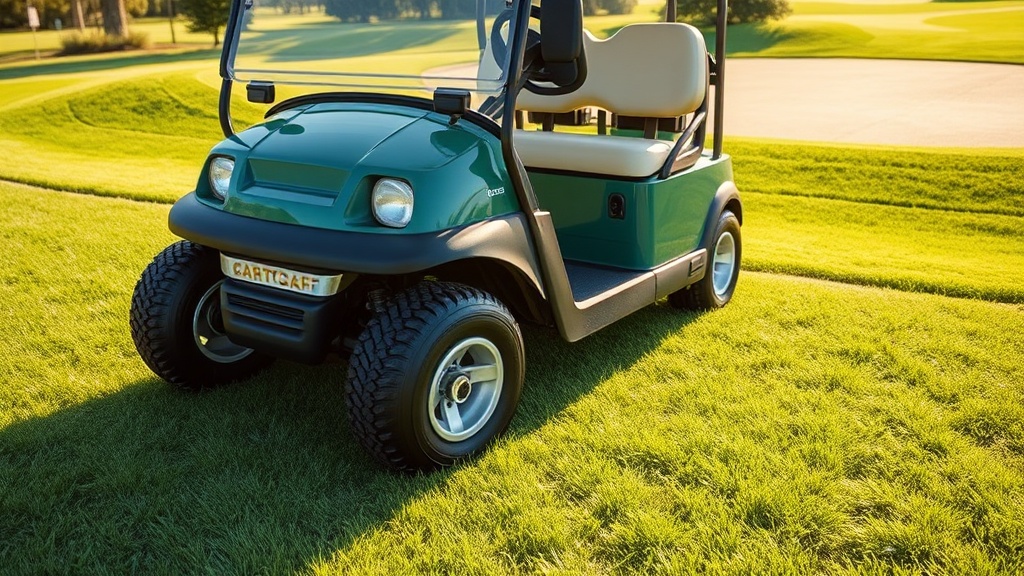
For golf cart owners, an unbalanced set of tyres is the fastest route to a rattling, uncomfortable ride – and prematurely worn tread. At CartCraft, we know that a smooth roll is the foundation of any dependable cart, whether you are cruising the fairway or navigating a private estate. This guide walks you through the causes of vibration, the balancing methods that work, and the practical steps you can take to keep your tyres true and your ride quiet. Expect clear instructions and real-world advice drawn from years of working with carts of every make.
Why Do My CartCraft Golf Cart Tyres Vibrate at Low Speed?
Vibration at low speeds – typically below 15 mph – often points to a static imbalance. In practical terms, one section of the tyre-and-wheel assembly is heavier than the opposite side. This causes a gentle but persistent wobble that you can feel through the steering wheel or the seat pan. Tyre defects, such as a shifted belt or a flat spot from parking on a hard surface for weeks, can mimic the same sensation.
Another frequent cause is a bent or out-of-round wheel rim. A minor impact with a kerb or a deep pothole on a concrete path can deform the rim enough to introduce a rhythmic shake. Even if the tyre itself is perfectly round, a distorted rim will transmit vibration directly into the axle.
Finally, check the wheel nuts. A single loose nut can allow the wheel to move fractionally on the hub, creating a low-frequency shudder that gets more noticeable as you accelerate. Before you invest in any balancing equipment, make sure every lug nut is torqued to the manufacturer’s specification – typically 65 to 75 foot-pounds for most four-wheeled carts.
Should I Use Static or Dynamic Balancing on a Golf Cart?
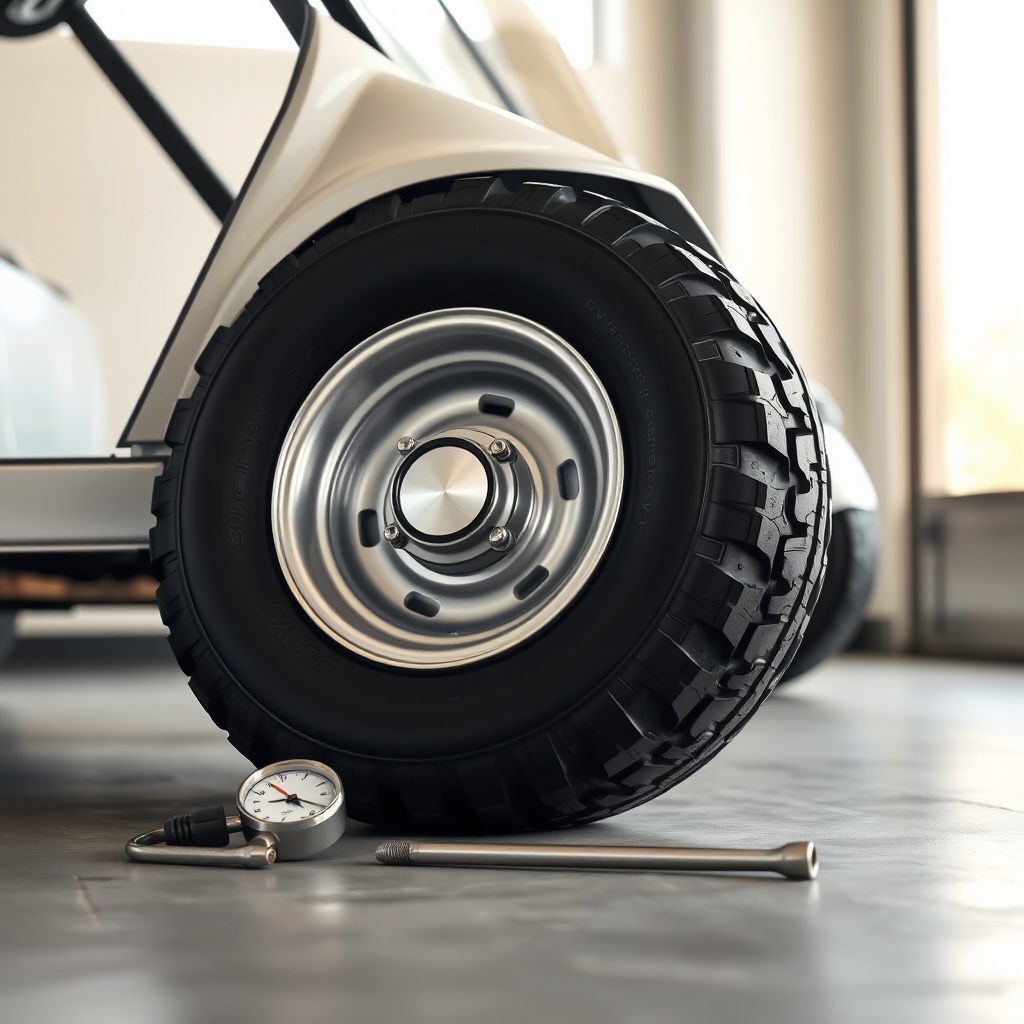
The choice between static and dynamic balancing depends on your driving speed and the level of smoothness you expect. For an electric cart that rarely exceeds 15 mph, static balancing is generally sufficient and far more practical for a DIY owner. Static balancing corrects heavy spots in one plane only – it balances the wheel as a whole around its centre.
Dynamic balancing, on the other hand, corrects imbalances in two planes (side-to-side and up-and-down). This is essential for road vehicles that travel above 40 mph. For the vast majority of golf carts, dynamic balancing on a shop machine is overkill – though it can help if you have a high-speed custom cart or a lifted model with oversized tyres that spin faster than standard 18-inch wheels.
For CartCraft owners who prefer a hands-on approach, here is a quick comparison of the two methods:
| Balancing Method | Best For | Equipment Needed | Typical Time per Wheel | Cost in GBP (£) |
|---|---|---|---|---|
| Static (bubble balancer) | Standard carts, under 20 mph | Bubble balancer, wheel weights | 10–15 minutes | £30–£60 (balancer cost) |
| Static (gravity block) | DIY owners, quick checks | Gravity block, jack stands | 5–10 minutes | £15–£25 |
| Dynamic (shop machine) | High-speed carts, lifted models | Professional spin balancer | 5 minutes | £10–£15 per wheel (shop fee) |
What Are the Best Balancing Materials for CartCraft Tyres?
For CartCraft carts, the most common balancing materials are stick-on lead weights and clip-on zinc weights. Stick-on weights are preferred for alloy wheels because they attach cleanly to the inside of the rim and do not mar the finish. Clip-on weights work well for standard steel wheels, but they can corrode over time in wet conditions unless you use stainless steel versions.
A newer alternative that is gaining traction in the golf cart community is the internal balancing compound – often sold as ceramic beads or liquid balancers. These products are poured into the tyre through the valve stem and distribute themselves dynamically as the wheel spins. The advantage is that they self-adjust as the tyre wears, and they compensate for minor rim runout. The downside is that they can clog the valve stem if you do not use a dedicated filter, and they add a small amount of rotating mass.
At CartCraft, we recommend traditional stick-on weights for most owners. They are reliable, inexpensive, and easy to remove when you replace a tyre. A pack of 50 grams of lead weights, enough to balance four wheels, costs roughly £8 to £12 from a local auto parts shop.
How to Balance CartCraft Golf Cart Tyres at Home: Step-by-Step
Balancing a golf cart tyre at home is a straightforward process that requires only basic tools and a little patience. Before you start, ensure the tyre is clean and inflated to the recommended pressure – typically 20 to 25 psi for most cart tyres. Remove any existing weights and mark the current heavy spot with a piece of chalk or a marker.
Set the wheel on a bubble balancer or a gravity block. If you are using a bubble balancer, spin the wheel gently and let it settle. The bubble will indicate the heaviest point – add weights opposite that mark. Start with a small amount, say 10 grams, then recheck. Add or remove until the bubble centres perfectly. For a gravity block, the principle is the same: the block will roll to the light side, and you apply weights to the heavy side.
Once balanced, tighten the wheel onto the hub using a proper cross-torque sequence. Test drive the cart on a smooth, level surface at various speeds. If you still feel a slight vibration, recheck the wheel for bent rims or tyres that have slipped on the bead – a rare but possible issue with extreme heat or cold.
What Owners Say About CartCraft Tyre Balancing
Owners who have followed CartCraft’s balancing guide consistently report a dramatic reduction in steering wheel shake and seat vibration. One user on the CartCraft forum noted that after balancing all four tyres with stick-on weights, his 2019 EZGO RXV ran “silent as a whisper” during a 36-hole round. Another owner of a lifted Yamaha Drive2 said the process eliminated a persistent wobble that had been bothering him for months – he had assumed it was a suspension issue.
Several owners have pointed out that balancing extends tyre life noticeably. One club manager in Surrey shared that balancing the fleet of 12 Club Car DS carts twice a year reduced tyre replacement frequency by nearly 30 percent, saving the club roughly £400 annually in tyre costs.
One caution that comes up frequently: do not skip the step of cleaning the rim before applying weights. Owners who forgot this step report that the weights fell off within a few weeks, especially during summer heat. A quick wipe with isopropyl alcohol costs pennies and solves the problem entirely.
How Often Should I Balance CartCraft Tyres – and When to Seek Help?
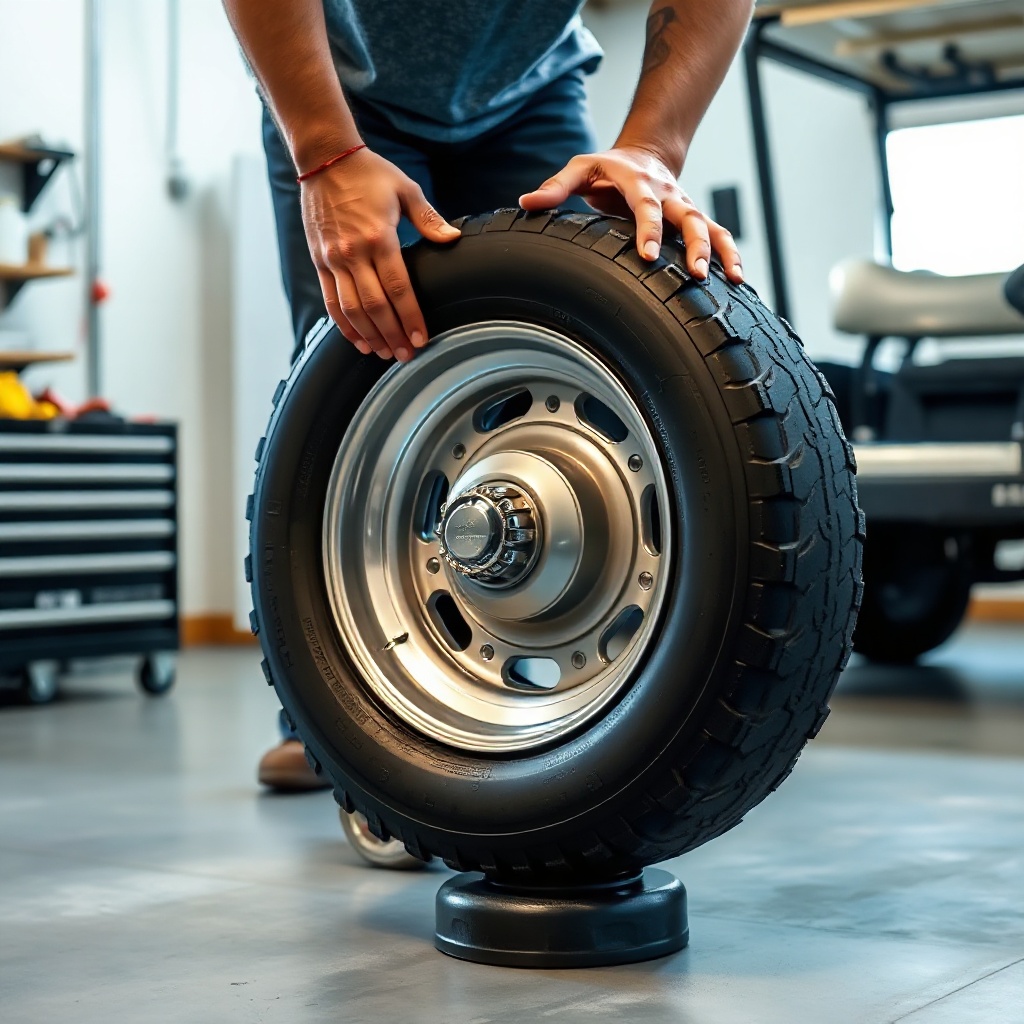
As a general rule, balance your CartCraft tyres every time you replace a tyre, or at least once a year during your regular maintenance check. If you notice a new vibration after hitting a curb or driving over rough terrain, it is wise to check balance before assuming the problem is in the steering rack or suspension.
If you are balancing wheels yourself and cannot get the vibration to disappear, it may be time to consult a professional. A shop can run the wheels on a dynamic balancer to identify a bent rim or a tyre with excessive radial runout – a condition where the tyre is not perfectly round even when inflated. Replacing a single wheel or tyre is often cheaper than chasing an elusive shake through multiple adjustments.
For owners with modified carts, such as those with larger wheels or high-speed controllers, balancing becomes even more critical. A wheel that is balanced at 12 mph may shake violently at 25 mph. If you have recently upgraded your cart’s top speed with a performance motor controller, revisit your wheel balance to match the new operating conditions. For related tips on keeping your cart running smoothly, check out the CartCraft Golf Cart Brake System Upgrade Guide: Performance Brake Pads and Rotors and the CartCraft Differential Fluid Change and Troubleshooting Noise Issues guide for common driveline noises that can mimic tyre imbalance.
Frequently Asked Questions
1. Can I balance a CartCraft tyre without removing it from the cart?
Technically yes, but it is impractical. You need to lift each wheel off the ground and rotate it freely, which means you must jack up the cart and support it on axle stands. Most home balancers require the wheel to be off the cart to sit flat on the balancing stand. It takes only a few extra minutes to remove the wheel, and you achieve a much more accurate result.
2. What pound-force or gram weights do CartCraft wheels typically need?
A standard 18-inch golf cart tyre and rim combination usually requires between 20 and 40 grams of weight per wheel. Heavier wheels with aggressive tread or alloy rims may need up to 60 grams. Start with 10 grams on the heavy side and adjust upward.
3. Will unbalanced tyres damage my CartCraft’s wheel bearings?
Yes, absolutely. A persistent imbalance sends cyclic loads through the bearing every revolution. Over time, this can accelerate bearing wear and lead to a rough, noisy hub. Replacing bearings on a typical cart costs £30–£50 per side, so balancing is cheap insurance. See the CartCraft Golf Cart High-Performance Brakes Upgrade: Disc Brake Conversion Kit Installation for related hub maintenance.
4. Can I use car wheel weights on my CartCraft?
Yes, with two caveats. First, ensure the weights are compatible with your rim type – clip-on for steel, stick-on for alloy. Second, car weights are often wider and may not fit the narrow rim shoulder of some golf cart wheels. In that case, trim them with side cutters or buy dedicated 5-gram golf cart weights.
5. Does tyre pressure affect balance?
Indirectly, yes. Low pressure causes the tyre to bulge and can alter the contact patch, magnifying existing imbalance. High pressure can make the tyre crown more rigid, which may transmit vibration more readily. Always inflate to the recommended pressure before balancing, and recheck pressure after installation.
6. My CartCraft still vibrates after balancing – what next?
If the vibration persists, inspect the wheel for a bent rim, check the tyre for a shifted belt (feel for a bulge), and examine the steering and suspension components. Worn tie rod ends or a loose kingpin can create a shimmy that feels exactly like an unbalanced tyre. For brake-related vibrations, consult the CartCraft Brake Pedal Adjustment Guide: Improve Pedal Feel and Stopping Distance to rule out brake drag. You can also read about How to Program the Hall-Effect Accelerator on CartCraft for Better Throttle Response if uneven acceleration is contributing to the sensation.