
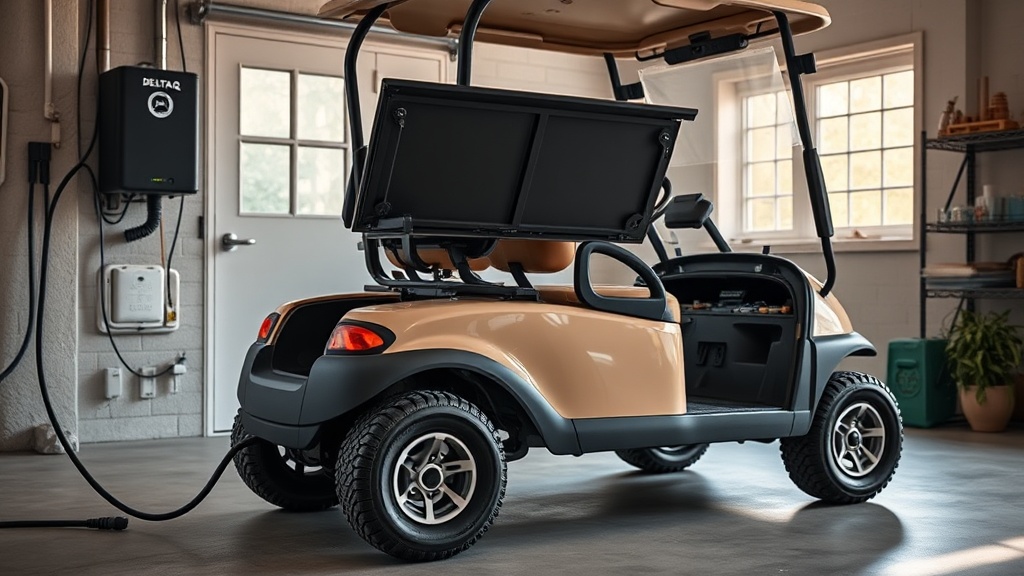
Why Battery Care Matters for Your Club Car Onward 4 Passenger
If you’ve invested in a Club Car Onward 4 Passenger, you know it’s built for comfort and utility. But the heart of the cart—its battery pack—determines how many rounds or errands you get between charges. With the right charging habits, your 48V lead-acid or lithium pack can last 4 to 7 years. Without them, you might be shopping for a replacement set in two seasons.
This guide walks through practical, product-specific advice for the Onward 4. We’ll cover charger settings, watering intervals, storage techniques, and what real owners have learned after putting 200+ cycles on their carts. Whether you bought your Onward new or second-hand, these tips will help you squeeze every amp-hour of life from the battery bank.
How Often Should You Charge the Club Car Onward 4 Passenger?
This is the number one question we get from Onward owners. The short answer: plug it in after every use, even if you only drove a mile. Lead-acid batteries (the standard on most pre-2024 Onward 4 Passenger models) suffer from partial state-of-charge (PSOC) cycling. If you park the cart at 60% SOC and let it sit for a week, you accelerate sulphation on the plates. That permanently reduces capacity.
For the 48V system common on the Onward, that means a full charge cycle takes about 6-10 hours with the factory Delta-Q charger. If you upgraded to a lithium pack (like the Club Car lithium option available since 2023), the chemistry is more forgiving. You can charge whenever convenient without worrying about memory effect, but it’s still best practice to plug in daily. Lithium loves being between 20% and 80%, but the Onward’s BMS handles that automatically.
One exception: if you store the cart for winter or more than a month, charge the lead-acid pack to 100%, then disconnect the charger. For lithium, charge to about 50% (use the dash meter as a rough guide). This reduces stress on the cells during deep storage.
What’s the Correct Charger Voltage for the Onward 4 Passenger?
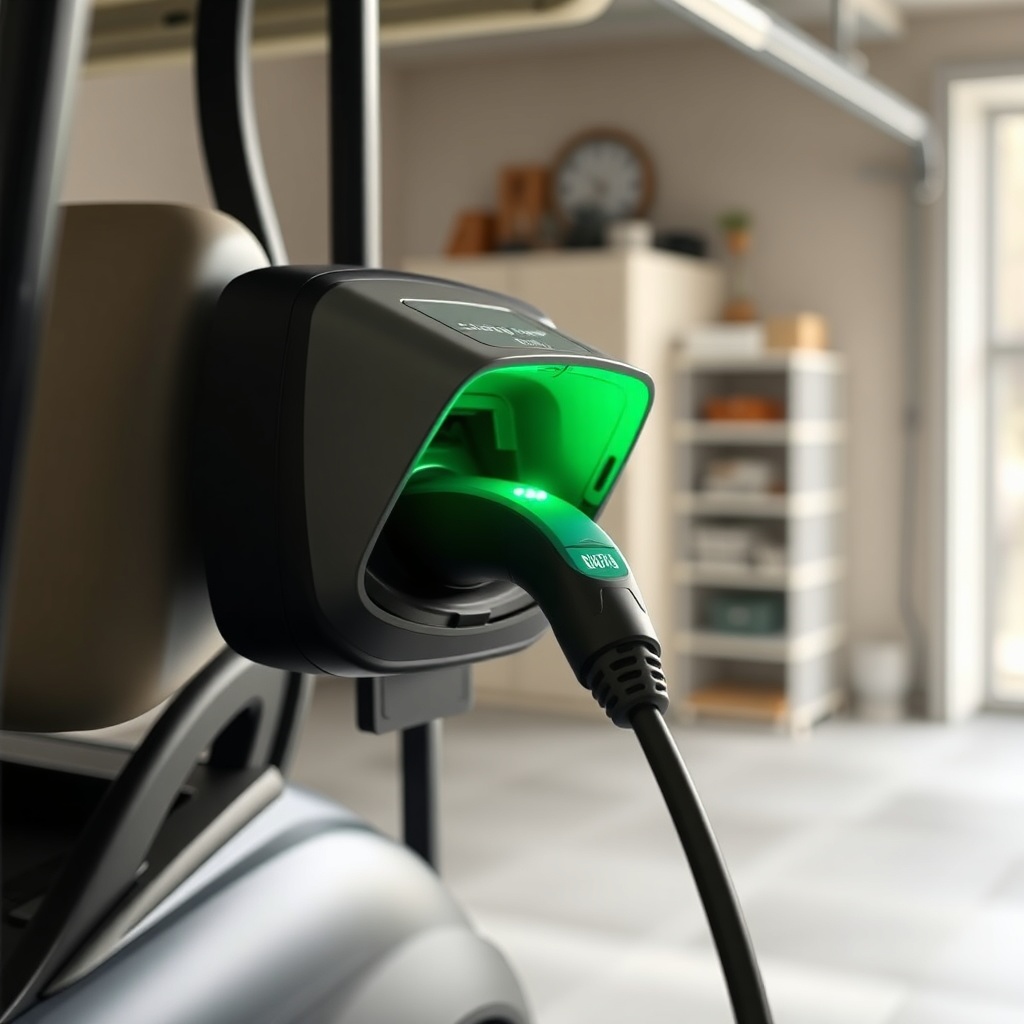
Your Club Car Onward 4 Passenger uses a 48-volt battery system, but the charger output isn’t a flat 48V. Here’s the real spec: the factory Delta-Q charger (model 913-4800 or later) delivers between 55.2V and 58.8V during the bulk and absorption phases. It then drops to a float voltage of about 52.8V to prevent overcharging.
If you bought a third-party charger, match its output profile to “48V lead-acid” or “48V lithium” depending on your pack chemistry. For lead-acid, the absorption voltage should be 2.45V per cell (58.8V total). For lithium iron phosphate (LiFePO4), the maximum is typically 3.65V per cell (58.4V for a 16S pack). Going over that risks triggering the BMS protection or, in rare cases, damaging cells.
A common mistake: using a 36V charger on the Onward. The port looks similar, but plugging a 36V unit into a 48V system will undercharge the pack, leading to sulphation in lead-acid batteries or an unbalanced state in lithium. Always verify the charger label before connecting. If you’re unsure, check our guide on Tuning the Speed Controller on a Club Car Onward 4 Passenger—it covers some electrical compatibility details.
When Should You Water the Batteries on a Club Car Onward 4?
If your Onward 4 Passenger came with flooded lead-acid batteries (Trojan T-875 or similar), you need to check water levels every 2-4 weeks during the driving season. Never let the plates get exposed to air—this causes permanent sulphation. On the flip side, overfilling is just as bad. Electrolyte expands when charging, and if the level is too high, it can overflow and damage the battery tray or wiring.
Here’s a severity table to help you assess your watering situation:
| Symptom | Not Urgent (can wait until next week) | Needs Attention Soon (within 2-3 charge cycles) |
|---|---|---|
| Water level at top of separator (1/4 inch above plates) | Yes | No |
| Plates are exposed or barely covered | No | Yes |
| Water appears cloudy or has sediment | No | Yes |
| Level is 1/8 inch below fill well neck | Yes (leave as is) | No—add only distilled water |
| White crystalline deposits on terminals | No (corrosion needs cleaning) | Yes (neutralise and clean) |
Use only distilled or deionised water. Tap water contains minerals that accelerate self-discharge and grid corrosion. A simple rule: fill after charging (when electrolyte has cooled down), not before. This gives the most accurate reading of the fluid level.
How to Store the Club Car Onward 4 Passenger Battery Over Winter
Winter storage is where many Onward owners accidentally shorten battery life. If you live where temperatures dip below freezing (32°F / 0°C), your lead-acid pack needs a completely different routine than a lithium one.
For lead-acid: fully charge the pack before parking it. Disconnect the negative terminal to eliminate parasitic draw from the controller or display. Store the cart in a garage or shed where the temperature stays above 32°F, if possible. Every 30 to 45 days, give the batteries a top-up charge (about 4-6 hours on the Delta-Q) to keep the cells balanced and prevent freezing. A discharged lead-acid battery freezes at around 19°F, while a fully charged one resists freezing down to -60°F.
For lithium (LiFePO4): the BMS has a built-in low-temperature charge cutoff, so you can’t charge below 32°F. If your Onward sits in an unheated shed, charge the pack to about 50% before parking. Lithium cells have very low self-discharge (around 2-3% per month), so you won’t need mid-winter top-ups unless you’re storing for six months or more. A small tip: if you have solar or a trickle charger with a lithium profile, a one-hour charge every quarter is enough to keep the BMS active.
Does the Club Car Onward 4 Passenger Need a Special Battery Charger?
The short answer: no, but the factory charger is well-matched to the Onward’s charging algorithm. Club Car ships the Delta-Q IC650 or IC1200 with most Onward 4 Passenger models. These chargers are “smart”—they communicate with the OBC (onboard computer) on pre-2019 carts, or directly with the controller on newer models. If you’re upgrading to a lithium pack, you might consider swapping to a charger with a lithium profile, though the factory Delta-Q can be reprogrammed by a dealer for about $50-80.
Aftermarket options like the Lester Summit II or Pro Charging Systems 48V work fine, but you’ll need to match the charge profile. For flooded lead-acid, a 3-stage profile (bulk, absorption, float) is best. For AGM or gel, use the same profile but lower the absorption voltage slightly (to 2.40V per cell). For lithium, a constant current/constant voltage (CC/CV) profile with a maximum voltage of 58.4V works. One thing: avoid cheap “universal” chargers that claim to work with all chemistries—they often don’t, and you’ll end up with unbalanced cells or premature capacity loss.
If you’re doing performance upgrades, consider how the charger interacts with other electrical modifications. For example, How to Install a Lift Kit on a Club Car Onward 4 Passenger usually doesn’t affect charging, but a lift can change how you access the battery compartment for watering. Plan ahead for that.
What Owners Say: Real Battery Charging Experiences
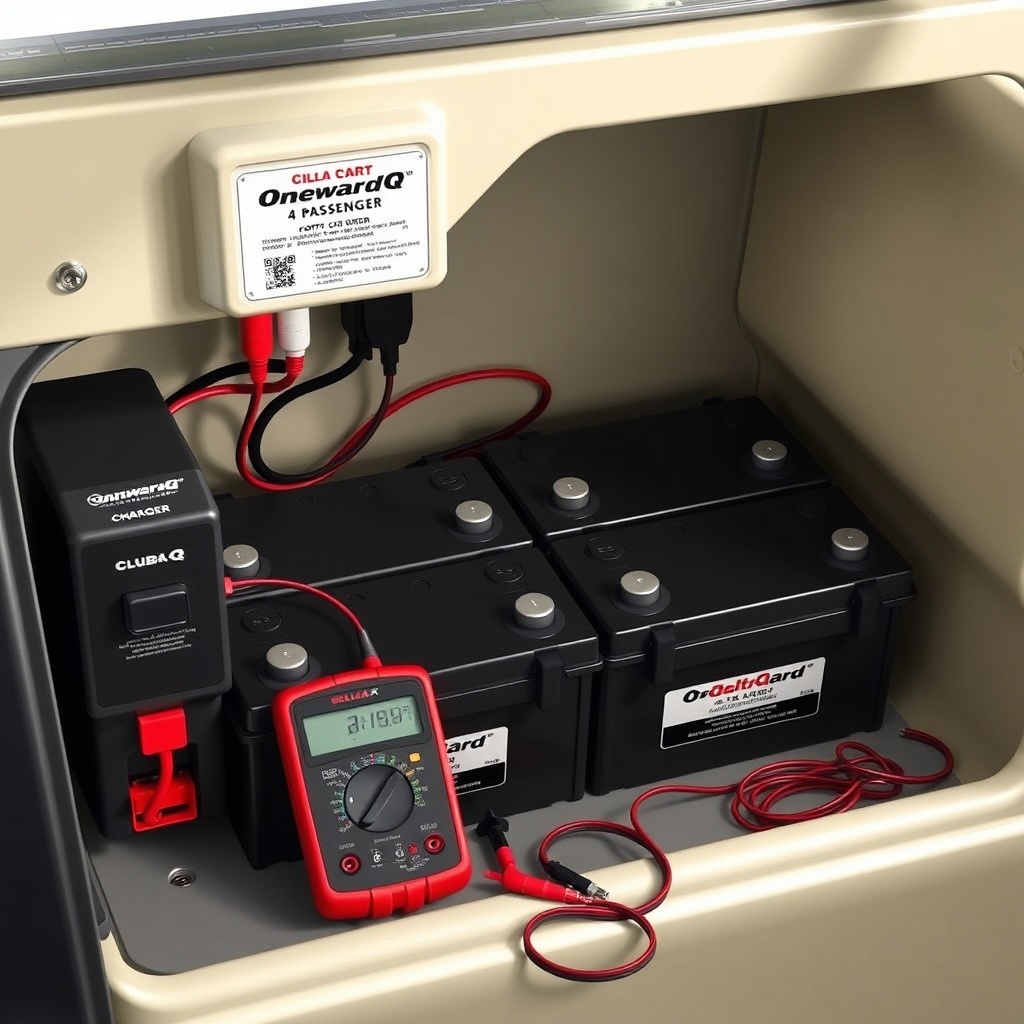
“I bought a used 2019 Onward 4 Passenger and didn’t check the water levels for two months. The plates were almost exposed. I topped them off with distilled water and ran three equalisation cycles with the factory charger. They recovered about 80% capacity, but I lost a year of life. Now I set a reminder every third Sunday.” — Mark T., Florida
“We upgraded to a lithium pack last spring. The first winter we left it at full charge in an unheated barn. Temperature dropped to 10°F. The BMS shut off charging, but when spring came the pack was at 47%. I thought it was ruined, but after a full charge it balanced fine. The dealer told me I should have stored at 50%.” — Diane R., Colorado
“I use a timer on my Delta-Q to stop charging after 8 hours. The charger knows when to stop, so it’s unnecessary. I was actually interrupting the absorption phase. Once I let it finish on its own, the pack stays balanced longer.” — John K., Texas
Frequently Asked Questions
How many years does the Club Car Onward 4 Passenger battery last?
With proper maintenance (regular charging, correct watering, clean terminals) flooded lead-acid batteries last 4-6 years in most climates. Lithium packs from Club Car or third-party brands often last 7-10 years. Harsh temperatures, deep discharges below 20% SOC, and irregular charging will shorten both chemistries’ life.
Can I charge my Club Car Onward 4 Passenger with a generator?
Yes, as long as the generator produces a clean sine wave output of 120V at 15-20 amps. Avoid modified sine wave or “cheap” inverter generators, as they can confuse the Delta-Q charger and cause it to enter fault mode. A Honda EU2000i or similar inverter generator works well.
What happens if I forget to plug in my Onward for a month?
For lead-acid batteries, the pack will self-discharge to about 70% SOC in 30 days. If it goes below 60%, sulphation begins. You may be able to recover capacity with an equalisation charge, but you’ll lose some life. For lithium, self-discharge is minimal (2-3% per month), so a month unplugged is usually fine as long as the pack started above 40% SOC.
Should I upgrade to a lithium battery on my Club Car Onward 4 Passenger?
It depends on your budget and use. Lithium costs $1,200-1,800 upfront, but saves weight (about 80 lbs lighter than lead-acid) and lasts longer. If you drive daily or need maximum range, lithium makes sense. If the cart is for casual weekend use, a well-maintained lead-acid set is more cost-effective. See our 2025 Golf Cart Buying Guide: Yamaha vs Club Car vs EZGO for a chemistry comparison.
Can I use a car battery charger on my Club Car Onward?
No, absolutely not. An automotive charger delivers a different voltage profile (typically 12V or 24V) and lacks the proper algorithm for deep-cycle batteries. Plugging one into an Onward’s 48V system can damage the charger, the OBC, or the batteries themselves. Always use a charger rated for 48V deep-cycle batteries.
Does a larger tire affect battery charging or life?
Indirectly, yes. If you install oversized tires (like 22-inch or 23-inch) without changing the speed controller settings, the motor works harder to turn them, drawing more current per mile. That reduces range and can cause deeper discharge cycles, which shorten battery life. If you plan to upgrade tires, check our guide on Best Tire Size Options for the Club Car Onward 4 Passenger to understand how different sizes affect battery drain.