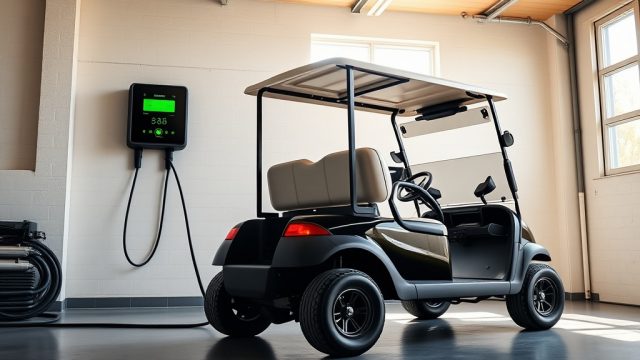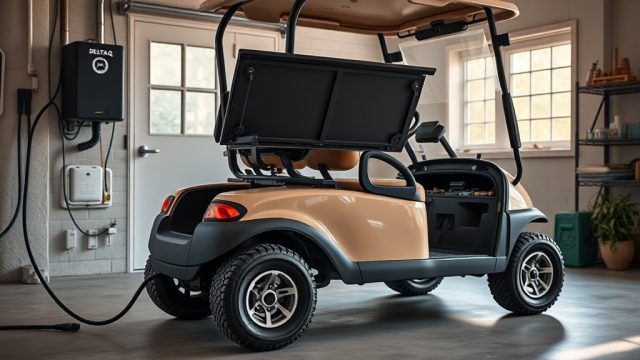

Setting up a charging station for your CartCraft golf cart is one of the most overlooked aspects of ownership, yet it directly impacts battery longevity, daily range, and your wallet. A poorly designed charging area can lead to slower charge times, premature battery degradation, and even safety hazards. This guide walks through the critical decisions—from charger placement to electrical specs—so every CartCraft owner can recharge with confidence.
How Do I Choose the Best Charging Station Location for My CartCraft?
The location of your charging station determines charging efficiency, cable wear, and safety. For a CartCraft golf cart, which often comes with a 48-volt lithium or lead-acid battery pack, the ideal spot should be:
- Indoors or covered: Direct sunlight raises battery temperature, reducing charge acceptance and shortening cell life. A garage, shed, or covered carport is preferred.
- Level ground: Uneven surfaces cause the cart to tilt, which can affect water levels in flooded lead-acid batteries and promote acid leaks.
- Ventilated but not drafty: Even modern lithium batteries produce minimal heat, but lead-acid types emit hydrogen gas during charging. A small fan or open window on opposite sides keeps air moving without cold drafts.
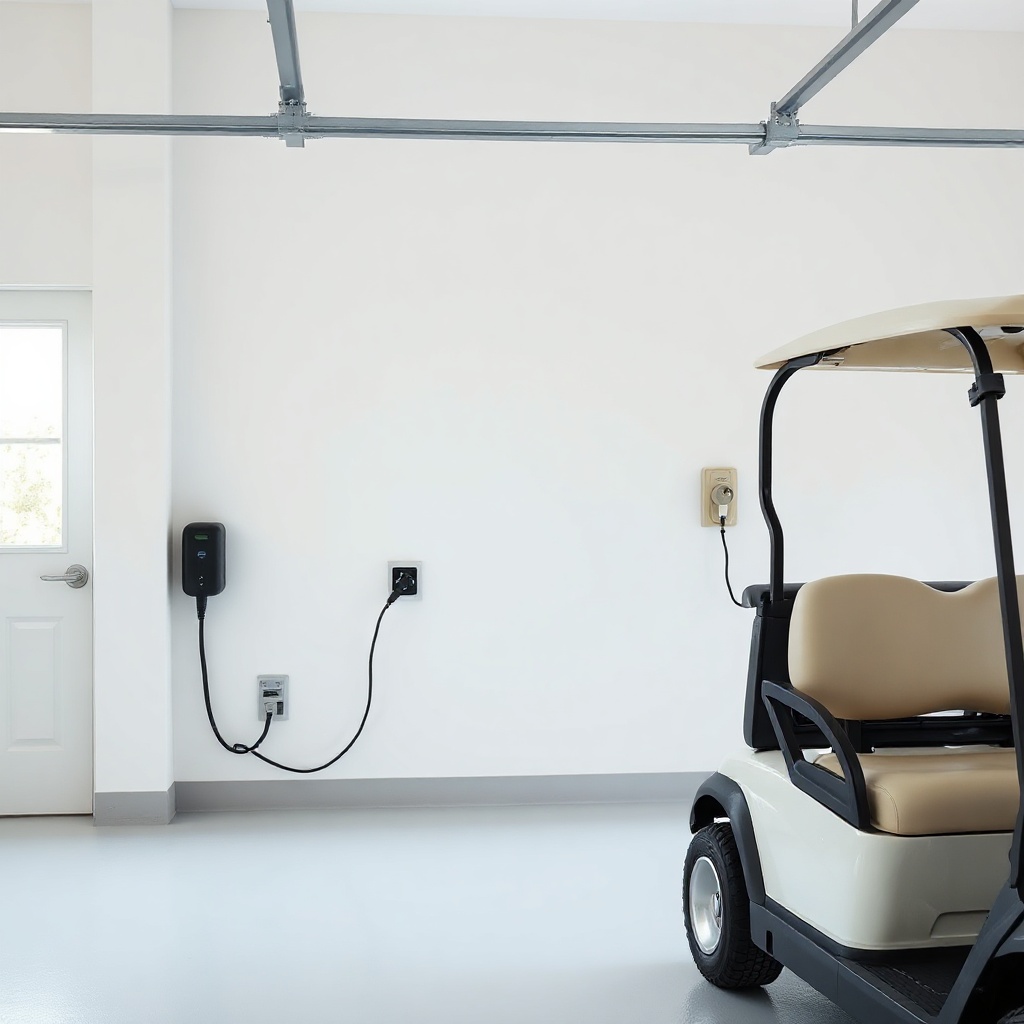
- Near a dedicated outlet: Avoid extension cords. Ideally, the outlet should be within 1.5 metres of the charger’s input cable to prevent voltage drop.
Placing the cart so the charging port faces the wall simplifies cable routing and prevents tripping hazards. If you park multiple CartCraft carts (common in fleet use), consider a centralised charging rack with individual outlets on a separate circuit.
What Voltage and Amperage Should My Charging Circuit Support?
Most CartCraft models sold across England use a 48-volt system, with some older or export variants at 36 volts. For safe and fast recharging, the AC input circuit must match the charger’s demand. Typical specs:
| CartCraft Battery Type | Voltage (V) | Charger Input (VAC) | Recommended Circuit | Max Draw (Amps) |
|---|---|---|---|---|
| Lithium (48V) | 48 | 230 | 10 A dedicated | 8–10 |
| Lead-Acid (48V) | 48 | 230 | 13 A dedicated | 10–13 |
| Lead-Acid (36V) | 36 | 230 | 10 A dedicated | 7–9 |
| Lithium (36V—less common) | 36 | 230 | 10 A dedicated | 5–7 |
Using a shared circuit with appliances like a freezer or washing machine can cause nuisance breaker trips and slower charging due to voltage sag. A dedicated circuit of the appropriate rating, with a residual-current device (RCD), is non-negotiable for safe daily charging.
For fastest charging, the CartCraft onboard charger or an aftermarket unit (such as the Lester Summit II) can handle the draw—but only if the wiring is at least 2.5 mm² (13–15 A rated). If you are unsure of your home’s wiring, consult a qualified electrician before plugging in for the first time.
Which Charger Type Works Best for My CartCraft?
CartCraft shipping chargers vary. Factory-supplied units are adequate, but upgrading can cut charge time by 30–50%. Two main categories:
- Standard onboard charger (25–30 A): Slower charge cycle—typically 6–10 hours for a 200 Ah pack. Suitable for overnight use. Usually includes a simple proportional voltage algorithm.
- Fast charger (40–50 A): Recharges the same pack in 3–5 hours. Ideal for commercial fleets or heavy daily use. Requires a dedicated circuit and battery management system (BMS) that can handle the current.
Lithium batteries tolerate fast charging better than lead-acid. If you replace lead-acid with lithium (an increasingly popular retrofit for CartCraft owners), you may also need a charger with a lithium-specific profile. Many owners pair their upgraded system with a custom programmable Curtis controller to match battery discharge curves, ensuring the motor doesn’t stress the pack during acceleration.
Pro tip: Always match the charger’s output voltage exactly to the battery’s nominal voltage. A 48V charger on a 48V pack is fine—but never exceed 58.4 V for lithium or 58.8 V for lead-acid during bulk charging.
Should I Use a Charging Timer or Smart Controller?
Manually unplugging once the battery is full is error-prone. Overcharging lead-acid batteries boils off electrolyte and damages plates. Undercharging lithium cells can lead to cell imbalance. A smart charging solution reduces these risks. Options include:
- Digital timer socket: Set for 6–8 hours; cost: around £15–£25. Simple but imprecise—does not sense battery state.
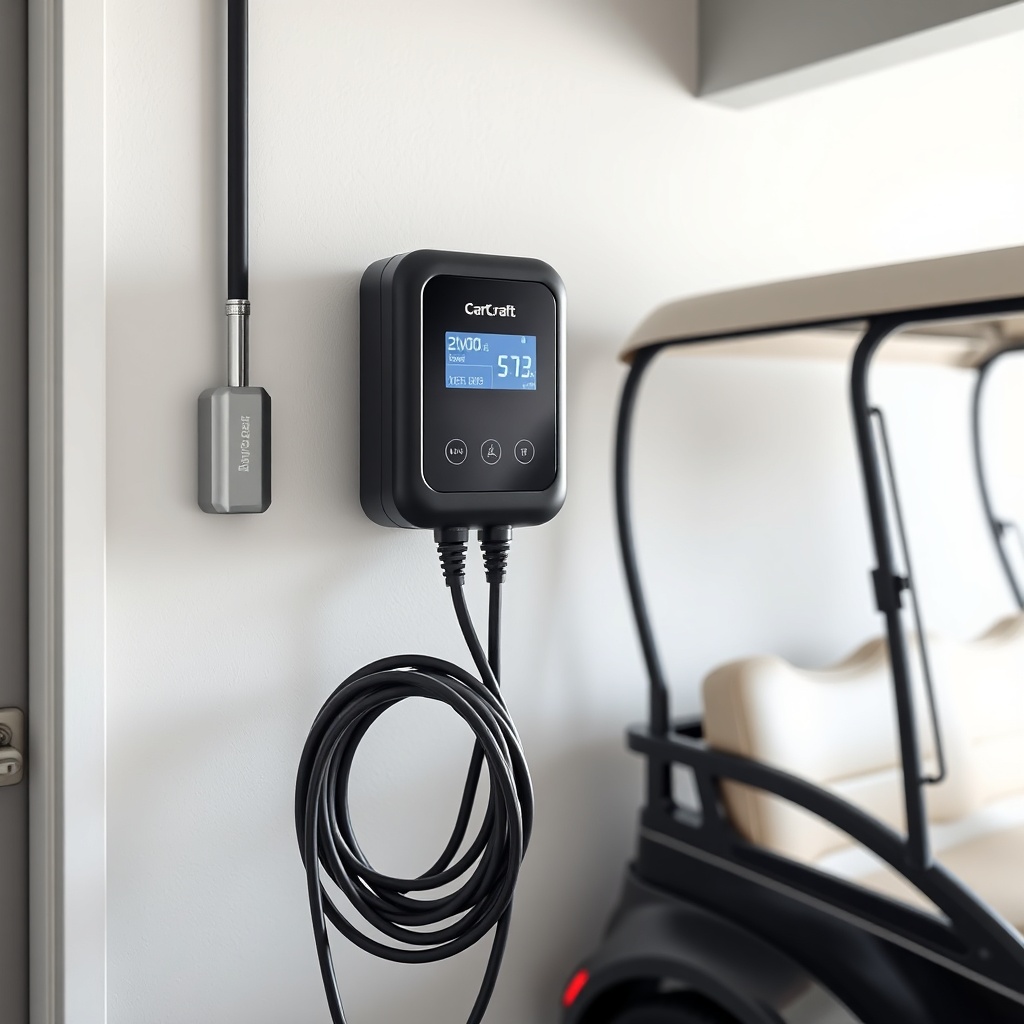
- Programmable charger with LCD: Many aftermarket chargers for CartCraft include a display showing voltage, current, and state of charge. Some allow you to set charge termination voltage. Prices range from £180 to £350.
- Smart plug with energy monitoring: Connects to Wi-Fi; you can monitor consumption and set schedules via app. Typically £20–£40. Good for checking if charging has finished.
- Full BMS integration: High-end setups use the battery management system to automatically disconnect the charger once each cell reaches full voltage. This is the safest method and is standard on newer lithium packs.
For most CartCraft owners, a programmable charger with a simple timer built in (e.g., “charge for 6 hours then float”) is a good balance of cost and safety. If you also plan to tune motor behaviour, consider the available aftermarket controllers discussed in the Curtis programming guide—they often include auxiliary input channels that can interface with a smart charger.
What Safety Measures Prevent Fire and Damage During Charging?
Electric golf cart fires, though rare, are often traced to charging errors. CartCraft owners should follow these rules:
- Use proper connectors: The supplied charging connector (usually a chunky round or Anderson-style plug) must be free of corrosion. Replace cracked housings immediately.
- Keep dry: Never charge in rain, snow, or high humidity. Water ingress into the charging port or charger can cause short circuits.
- Monitor temperature: If the charger or battery feels hot to the touch (above 50°C), stop the charge and inspect. Lithium batteries should never exceed 60°C during charging.
- Check fuses: Most CartCraft carts have a main fuse or circuit breaker between charger and battery. If charging fails to begin, check this fuse first.
- Ventilation for lead-acid: If you have flooded lead-acid batteries, hydrogen gas can accumulate. Charge only in a well-ventilated area, away from sparks, flames, and metal objects that could cause a short.
If you are retrofitting your CartCraft with a high-performance controller for towing or hill climbing, ensure the charging system can handle the increased electrical load. The same torque programming setup might also help you optimise the charging profile by adjusting the regenerative braking voltage thresholds.
How Can I Speed Up Charging Without Damaging the Battery?
Faster charging is desirable but must respect the battery’s chemistry. Here are actionable steps:
- Upgrade to a 40 A+ charger: If your battery supports it (check BMS or manufacturer spec), a 40 A charger halves charge time. Typical cost: £250–£450.
- Lower ambient temperature: Cooler batteries (15°C–25°C) accept charge faster and with less heat buildup. Avoid charging immediately after a long run—let the pack cool for 30 minutes.
- Use a constant-current/constant-voltage (CC/CV) profile: Most modern chargers for CartCraft already do this, but older units may lack the CC phase. Replace if yours only provides a CV profile.
- Keep connections clean: Dirty terminals can add resistance. Use a brass brush and contact cleaner every few months.
- Parallel charging (advanced): For fleet owners, a high-current charger with two outlets can charge two carts simultaneously—but only if the outlet is rated for at least 20 A.
Be aware that repeatedly fast-charging lead-acid batteries shortens their lifespan. Lithium-ion packs handle rapid charging much better, so if you need daily speed, consider a lithium conversion. If you do, the Curtis controller tuning procedure will also need to account for the lithium battery’s lower voltage sag under load.
What Owners Say
Real-world feedback from CartCraft owners across England highlights three recurring themes:
- “I installed a dedicated 13 A circuit and my charge time dropped from 9 hours to 6 hours.” – Richard T., Hampshire. He also noted that the charger no longer trips the main house breaker.
- “I switched to a smart charger with a lithium profile after converting my pack.” – Sarah L., Cornwall. She estimates she recovers full range in 4.5 hours, down from 10 with the original lead-acid charger.
- “The biggest improvement came from cleaning the connectors and using a timer plug to avoid overcharging.” – James P., Essex. He says his battery pack now lasts more than 1,200 cycles.
Common advice: “If you have any doubts about your home’s wiring, pay a qualified electrician. It’s cheaper than a dead battery—or worse, a fire.”
Frequently Asked Questions
Q1: Can I charge my CartCraft with an extension cord?
A: It’s not recommended. Extension cords create voltage drop, which reduces charging speed and can overheat the cord. If unavoidable, use a heavy-duty cord rated for at least 16 A and keep it as short as possible.
Q2: How long does a full charge take on a standard CartCraft charger?
A: With a factory 25–30 A charger and a 200 Ah lead-acid pack, expect 8–10 hours. Lithium packs with the same charger charge in 6–8 hours because they can accept higher voltage without gassing.
Q3: Is it safe to charge my CartCraft overnight?
A: Yes, if the charger is in good condition and has automatic shut-off or float mode. For lead-acid, avoid leaving it at bulk voltage for more than 12 hours. Smart chargers handle this automatically.
Q4: What should I do if my CartCraft charger gets very hot?
A: Stop charging immediately. Allow the charger to cool. Check for blocked vents, high ambient temperature, or a failing fan. If it remains hot, replace the charger. A hot charger can indicate internal damage.
Q5: Can I use a car battery charger on my CartCraft golf cart?
A: No. Car chargers output 12V (or 24V for heavy-duty) and are not designed for the 36V or 48V system of a CartCraft. Using one can damage the battery and charger. Always use a golf-cart-specific charger.
Q6: Does charging at home increase my electricity bill significantly?
A: A typical 5 kWh charge (half of a 10 kWh pack) at UK rates of roughly 24 p/kWh costs about £1.20. Charging daily adds about £36 per month—a small fraction of running costs compared to petrol alternatives.