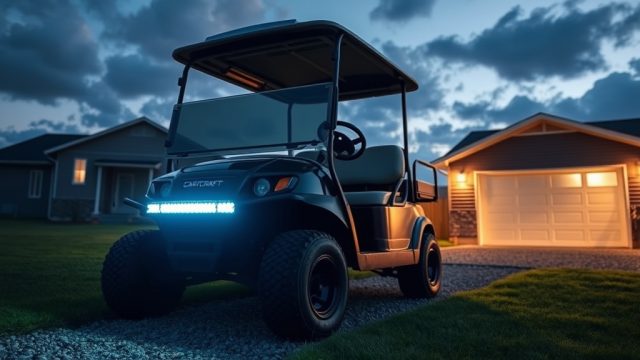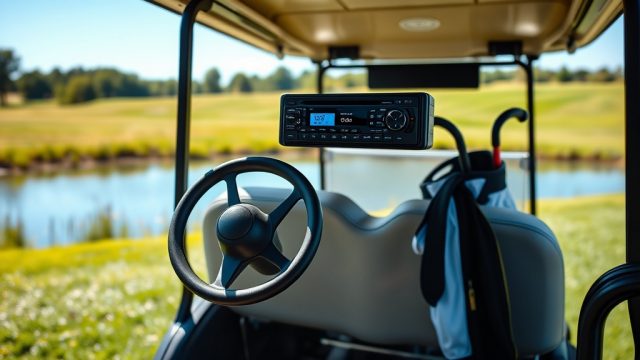
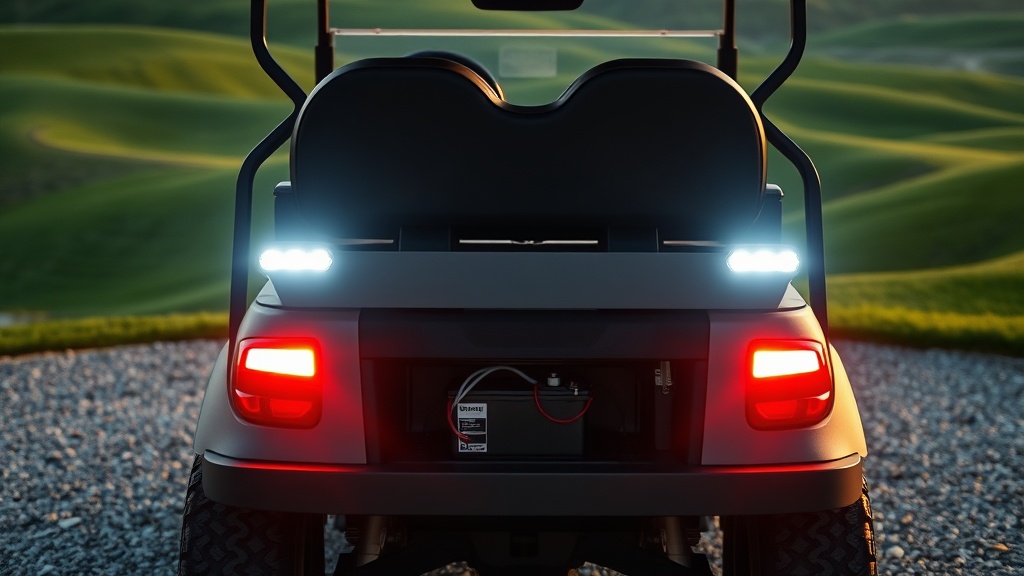
For EZGO TXT owners seeking to enhance their golf cart’s visibility and ambiance without switching to a full 48-volt lighting system, converting the lighting circuit to a dedicated 12-volt battery is a practical, cost-effective solution. This modification allows you to power high-performance LED headlights, taillights, and interior accessories while preserving the original drive battery’s capacity. This guide covers the essential steps, components, and considerations for a professional-grade 12-volt battery conversion on your EZGO TXT.
Why Convert to a Dedicated 12-Volt Battery for the EZGO TXT?
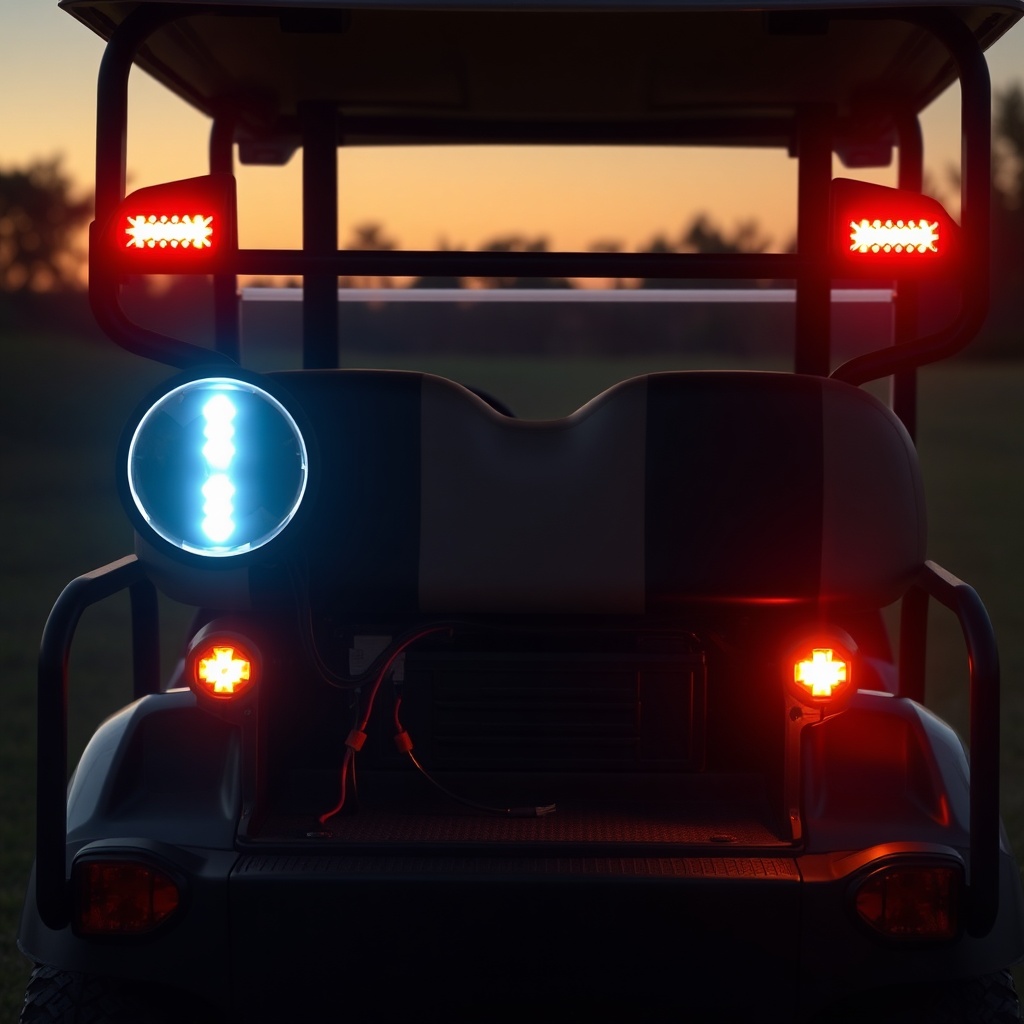
The standard EZGO TXT operates on a 36-volt or 48-volt drivetrain, but most aftermarket lighting and audio equipment expect 12 volts DC. Many owners tap into a single battery within the existing pack, but this can unbalance the pack’s state of charge, leading to premature battery failure. A dedicated 12-volt auxiliary battery offers three primary advantages:
- Preserves Main Battery Health: By isolating the lighting load, you prevent deep cycling of any single battery in the traction pack, extending the life of your capital investment.
- Higher Output Capacity: A dedicated battery can handle higher-draw accessories like stereo amplifiers, light bars, and interior dome lights without voltage drops.
- Simplified Troubleshooting: If your lights fail, you isolate the problem to the auxiliary system rather than the complex high-voltage drivetrain. This makes upgrades like the EZGO TXT Suspension Upgrade Guide more straightforward when you’re upgrading multiple systems simultaneously.
Which 12-Volt Battery is Best for My EZGO TXT?
Choosing the correct battery determines how long your lights run between charges and how easily the unit installs. For most EZGO TXT conversions, a deep-cycle AGM (Absorbent Glass Mat) battery in the 18 Ah to 35 Ah range is ideal. Factors to consider:
- Size: The battery tray under the front cowl or inside the battery compartment must physically fit. Measure your available space—many owners use a 12V 22Ah battery that measures roughly 7 x 5 x 6 inches.
- Type: AGM batteries are sealed, vibration-resistant, and maintenance-free, making them perfect for golf cart environments. Flooded lead-acid batteries are cheaper but may spill acid if tipped.
- Reserve Capacity: For a basic LED headlight kit (roughly 2.5A draw), a 22Ah battery will power lights for 6–8 hours per charge. Upgrade to 35Ah if you add a stereo or light bar.
How to Wire a 12V Battery Conversion on an EZGO TXT
A clean, safe installation requires understanding the isolation between the auxiliary battery and the main drive system. Follow these steps:
- Mount the Battery: Secure the 12V battery in the front battery compartment or under the seat using a battery box and strap. Ensure it cannot shift during driving.
- Install a Battery Charger: Use a dedicated 12V automatic battery charger (like a Battery Tender) that can be plugged into AC power. Wire it to the 12V battery terminals with a fused lead for safe charging.
- Connect the Load: Run positive wire from the 12V battery’s positive terminal through a fuse block (20A recommended) to your lighting switch. The negative wire connects to the battery negative terminal.
- Grounding: Do NOT connect the 12V system’s negative to the cart’s frame unless you verify no ground loops exist with the main system. Isolate completely unless using a DC-DC converter.
- Relay for High Current: If using a light bar over 100W, incorporate a 30A relay controlled by a small toggle switch.
Common Mistakes to Avoid in the Conversion
Even experienced DIY cart owners can make errors that damage components or create fire hazards. The most frequent mistakes include:
| Mistake | Consequence | Solution |
|---|---|---|
| Using the main battery pack’s common ground | Voltage difference can fry lights, controller, or solenoid | Use a fully isolated 12V system with its own negative return |
| Oversizing the fuse without verifying wire gauge | Wire melts before fuse blows, causing fire risk | Match fuse rating (e.g., 20A) to wire capacity (12 AWG for 20A) |
| Not using a battery cutoff switch | Parasitic drain depletes auxiliary battery in 2-3 days | Install a marine-grade battery disconnect switch on the positive wire |
| Mixing flooded and AGM batteries in the 12V system | Different charging rates cause sulfation | Use same type (both AGM or both flooded) for any 12V bank |
| Mounting battery loose or near exhaust | Vibration fractures terminals; heat degrades capacity | Use rubber-lined battery strap and mount at least 12 inches from exhaust |
If you encounter solenoid issues after converting your electrical system, refer to the EZGO TXT Solenoid Replacement Guide for Reliable Starting—a faulty solenoid can mimic battery or wiring problems.
What Owners Say About the 12-Volt Battery Conversion
Forum discussions on CartCraft and other golf cart communities reveal overwhelmingly positive feedback from EZGO TXT owners who performed this upgrade. The most commonly cited benefits include:
- Brighter lighting without voltage drop: Many report that after switching to a dedicated battery, their LED headlights run at full brightness even when the main pack voltage dips under load.
- Easy integration with existing wire harnesses: Owners appreciate that the conversion uses standard automotive components like fuse blocks, relays, and SAE connectors.
- Extended main battery life: Several owners noted their 36V packs lasted an additional 1–2 years after moving lighting loads off the single battery.
- One caution: A few owners mentioned that without a battery charger, forgetting to charge the 12V battery separately can leave you without lights after 2–3 nights of driving. A smart charger with pigtails solves this neatly.
Frequently Asked Questions
Can I use a DC-DC converter instead of a separate battery?
Yes, a 48V to 12V DC-DC converter (rated 20A-30A) can replace the dedicated battery entirely. This is ideal if you want zero maintenance and no separate charging. However, a converter costs around £80–£180 (approx. $100–$220 USD) and may require more complex wiring. The separate battery solution under £50 for the battery and charger is simpler for most owners.
How much does the entire conversion cost in UK currency?
For an EZGO TXT conversion, expect to pay: 12V 22Ah AGM battery (£45–£70), battery box and strap (£10–£20), 12V automatic charger (£25–£40), fuse block and wire (£15–£30), and toggle switch (£5–£10). Total: approximately £100–£170. If you need LED lights too, add £35–£80 for a basic kit.
Do I need to upgrade the EZGO TXT solenoid for the 12V system?
No, the main solenoid is only for the high-voltage drive circuit (36V or 48V). The 12V lighting system runs on its own battery. However, if you add a high-current winch or stereo amplifier that draws from the main pack, you may need a higher-rated solenoid. Check our EZGO TXT Solenoid Replacement Guide for sizing details.
How long will the 12V battery last on a single charge?
With a standard LED headlight kit drawing 2.5A, a 22Ah battery lasts about 6–8 hours of continuous use. If you add a stereo (5A draw) and interior lights (1A), runtime drops to 3–4 hours. For longer runtime, use a 35Ah battery (costing an extra £20–£30) or consider a DC-DC converter for unlimited runtime while driving.
Can I charge the 12V battery while the main pack is charging?
Yes, but only if you use a separate charger for the 12V battery. Do not attempt to charge both packs in parallel unless you have a dedicated multi-bank charger. The simplest solution is to mount the 12V charger pigtail under the seat, next to the main charger port, and plug in both when you park.
Will this conversion void my EZGO warranty?
Possibly, if the conversion causes damage to the controller or wire harness. However, a properly isolated 12V system that does not tap into the main battery pack or controller connections should not void warranty claims unrelated to electrical modifications. Always consult your dealer if the cart is still under manufacturer warranty.